50 book club questions that work for any book

Fifty book club questions that work for any novel or non-fiction title, sorted by what you want to talk about. Tested in my own two book clubs.

Last month one of my book clubs spent forty minutes on the question of whether the main character would have made a good flatmate. It was a lovely evening and we said almost nothing about the book. I came home and thought: next time I am bringing questions. Years ago I wrote nine tips for a successful book club, and tip number five was exactly this, have some questions ready. I never wrote them down. So here they are, fifty of them, sorted by what you might want to talk about. They work for a novel, a memoir or a biography.

Questions to open the evening

  1. What did you expect from this book before you started, and did it deliver?
  2. Where were you when you read most of it?
  3. Did you read it in one go or in small portions?
  4. Which page or scene made you decide to keep going?
  5. Was there a point where you nearly gave up?
  6. If you had to describe the book in one sentence to a friend, what would you say?
  7. Did the cover or the title promise something the book did not keep?
  8. Who would you give this book to, and who would you keep it from?
  9. What is the first word that comes to mind now that you have finished?
  10. Did you look anything up while reading?

Questions about the people in the book

  1. Which character did you understand best, and which one not at all?
  2. Who would you have liked more of?
  3. Did anyone change over the course of the book, or did only your view of them change?
  4. Was there a character you disliked at first and warmed to later?
  5. Which decision in the book would you have made differently?
  6. Is the narrator telling you the whole truth?
  7. Who holds the power in this story, and does that shift?
  8. Would you have been friends with the main character?
  9. Did any of the relationships feel familiar from your own life?
  10. If one character could read this book, how would they react to the way they are shown?

I asked question sixteen when we read James by Percival Everett, and it kept us busy for the rest of the night.

Questions about how it is written

  1. How would you describe the voice of the book: warm, cold, funny, distant?
  2. Did the length feel right?
  3. Was there a sentence you wanted to write down?
  4. How did the book handle time: did it jump, slow down, go in circles?
  5. Did the structure help the story or get in its way?
  6. Would the book work told from another point of view?
  7. Was anything left out on purpose, and did that work?
  8. How did the first page and the last page talk to each other?
  9. Did the book trust you as a reader, or did it explain too much?
  10. Is this a book you read for the plot or for the sentences?

Question thirty is the one that split my other club down the middle over Orbital by Samantha Harvey. Half of us did not miss a plot at all.

Questions about the world outside the book

  1. What does the book say about the time it was written in?
  2. Would it be a different book if it were set where you live?
  3. Did it change your mind about anything, even slightly?
  4. Which part of the book felt most true, and which least?
  5. Did it remind you of another book, a film or a conversation?
  6. What would you want to ask the author?
  7. Did you learn something you did not expect to learn?
  8. Is there a theme the author never names but that is clearly there?
  9. Who is this book really for?
  10. Would you have read it if nobody had chosen it for you?

Questions for the end of the evening

  1. What will you remember about this book in a year?
  2. Would you read something else by the same author?
  3. Did the discussion tonight change how you feel about the book?
  4. What did someone else say tonight that surprised you?
  5. If the book had one more chapter, what would be in it?
  6. What should the next book be, given how this one went?
  7. Did the ending feel earned?
  8. Who deserved a better ending?
  9. Is this a book to keep, to lend or to give away?
  10. On a scale from “I was polite about it” to “I have already bought a copy for someone”, where are you?

You do not need all fifty. I take five or six, write them on the back of an old bookmark and let the others pick. Oddly, the questions I think are weakest often open the best conversations. Which questions get your book club talking?
Five German dating novels worth translating

Five German dating novels I wish my English-reading friends could pick up: Berlin apps, a Hamburg Cupid, and a love story that takes thirty years.

Every couple of months a friend in London asks me the same thing: is there anything funny and German about dating that she could actually read? And every time I go through my shelf and come back with the same answer. Yes, plenty, but you would need to learn German first. So here is the list I keep sending her, in the hope that a translator or a publisher stumbles over it one day. These are five books about dating, written in German, and as far as I can tell not one of them has an English edition yet. I have checked, and I will check again before this goes live.

1. Isobel Markus: Dating-Roman

Two women in their mid-forties, one flat in Berlin, seven dates in one week. One of them is looking for someone who simply fits, the other one wants the opposite of commitment, and both of them learn more about themselves than about the men across the table. Markus writes in short, quick scenes that feel like being told the story over a glass of wine, and the book was picked as WDR 5’s book of the week in the summer of 2024. It was published by mikrotext, a small Berlin press, which is probably one reason nobody abroad has noticed it yet.

2. Anika Decker: Zwei vernünftige Erwachsene, die sich mal nackt gesehen haben

The title translates roughly as “Two sensible adults who once saw each other naked”, and that already tells you the tone. Decker wrote the screenplays for some of the biggest German romantic comedies of the last twenty years, and this is her first novel: Nina, forty-nine, divorced with two children, falls for David, who is twenty-nine, and has to work out whether that is a midlife crisis or simply her life. It is sharper than the cover suggests, with a side plot about power in the film business that hits harder than the jokes.

3. Julia Karnick: Man sieht sich

If you liked One Day, this is your book. Robert falls for Frie in 1988 when he joins her class at a school in Hamburg, and for the next thirty-five years the timing is always wrong, right up to the class reunion in 2022. It was a Spiegel bestseller in Germany, it is set between Hamburg and the Baltic coast, and it has the kind of long, patient structure that translates well because it does not depend on wordplay. The title means “See you around”, which is exactly what these two keep saying to each other.

4. Anna Dushime: 1000 letzte Dates

Strictly speaking this is the one non-novel on the list, so forgive me for cheating. Dushime, a journalist and presenter in Berlin, went back to dating apps after twelve years and a separation, as a single mother in her mid-thirties, and wrote down what happened, from a McDonald’s car park to bars in Berlin to a trip to Kigali. What makes it worth translating is not the dates themselves but what she does with them: the book turns into an argument about why the standard two-person relationship might not be the goal at all. It came out in autumn 2025 and started a proper discussion here.

5. Gero Wenderholm: Manfred mi Amor

The newest title on the list, out on 22 October 2026 with a small independent publisher, PMLakeman-Verlag, and the only one of the five told from a man’s point of view. Our narrator is dating his way through St. Pauli, in real bars and on real streets you could visit tomorrow, with his own personal Cupid called Manfred as a second voice in his head, commenting on every swipe and every awkward silence. I read an early copy in spring and wrote about it here; it is a comic novel first and a love story second, and the Hamburg setting alone deserves an English audience.

Why none of these has crossed the Channel yet

I have my theories. Comedy is hard to sell in translation, the German book market is big enough that publishers do not need to look abroad, and dating novels from Germany are not what foreign editors expect to find in Frankfurt. Still, three of these five are about people over forty trying again, which is not exactly a niche audience in Britain either.

If you read German, all five are easy to find. If you do not, and you happen to work in publishing, you know where to look. And if I have missed a German dating novel that you think belongs on this list, tell me in the comments. My friend in London is still waiting.

5 places for book lovers – Leiden

Five Leiden spots I keep going back to: a free book attic, two bookshops facing each other on Breestraat, and a library with a decent coffee bar.

Leiden was never meant to be a bookshop trip. I went for the Rijksmuseum van Oudheden on a grey Saturday, got rained on between the station and the Breestraat, and ducked into the first doorway with a dry floor and something to read. Two hours later I had a paper bag with three novels I had not planned to buy and a vague sense that the museum could wait. That happens to me a lot in this town. After writing up Amsterdam, Leiden felt like the obvious and much calmer next stop. Opening times are as I found them in September 2026; do check before you travel, because Dutch shops love a Monday afternoon start.

1. Mayflower Bookshop: the international bookshop

Breestraat 70 is where I dried off that first time, and it has become my default. Mayflower sells new and second-hand books side by side, mostly in English. The second-hand shelves are the part I like best: prices are fair, the stock turns over, and there is a three-for-two deal I have never once resisted. It also runs lecture series and reading groups, so some evenings it is more living room than shop. They opened a second branch on Lange Poten in The Hague in 2021, one more reason my Den Haag guide is overdue an update. Mondays they open at noon.

2. De Slegte: the second-hand and remainder shop

Almost directly opposite, at Breestraat 73, is De Slegte. If Mayflower is the living room, De Slegte is the attic of a well-read aunt: used books and ramsj, the Dutch word for remainders, restocked every day, which is why the regulars come in weekly. The English section is large by Dutch standards. I have found paperback thrillers for a couple of euros and a heavy art book I had no business carrying home on the train. Give yourself time here. Nothing is arranged for a quick in and out, and that is the point.

3. Boekhandel Kooyker: the proper bookshop

A few doors along at Breestraat 89 is Kooyker, the kind of established bookshop every university town needs. It leans academic, with serious non-fiction and the journals that go with a student population, but there is an English top ten by the till and the staff know their fiction. This is where I go for the new hardback rather than the lucky find, and where I check the events board: in autumn it fills up with children’s book week and the history month. Closed on Sundays, like most shops on this street.

4. De Boekenzolder: the free book attic

This one is outside the centre, on the Admiraal Bankertweg, and it is the place I tell people about first. De Boekenzolder is a charity run entirely by volunteers, and every book in it is free. You browse an attic’s worth of donated books in Dutch, English and a surprising range of other languages, and take up to ten stamped copies home. Donations are welcome, and I always leave some, because the alternative is that this place disappears. It is only open Thursday to Saturday afternoons, one until half past four, with a handful of closing days through the year, so plan the visit. Bring a bag. Bring a bigger bag than you think.

5. Bibliotheek Leiden: the public library with a coffee bar

When I have bought too much and need to sit down, I walk to Nieuwstraat 4. The central library is run by BplusC, which bundles it with a music school and cultural centre, so the building is busier and more mixed than a library usually is. There are work tables with free wifi and a small coffee bar where I have read half a novel over one flat white. Thursdays it stays open until nine, my favourite time: the students have thinned out and the building goes quiet. Sundays it is closed.

A walk between the shelves

The thing about Leiden is that the books do not stop at the shop doors. Since 1992 the city has painted more than a hundred poems on its walls, in Russian, Spanish, English, Chinese and many other languages, and once you know they are there you see them everywhere. It makes the town feel like it was built by readers, which, given the university has been here since 1575, it more or less was.

If you have done Amsterdam and Haarlem, put Leiden next. And if you know a shelf I have missed, I would like to hear about it. There is always room in the bigger bag.

5 places for book lovers – Amsterdam

Amsterdam and books, for me that is a love story with a very concrete starting point. A few years ago I was in the city for a day, it started raining (of course it did), I fled into the nearest bookshop and walked out with Diary of a Bookseller by Shaun Bythell. That one impulse buy later sent me all the way to Scotland to run a bookshop myself for a week. So you could say Amsterdam bookshops have a lot to answer for.

After my lists for The Hague and Haarlem, Amsterdam was overdue anyway. All five places are in the city centre, you can easily walk from one to the next, and together they make a perfect plan for a rainy day. So: for most days.

1. The American Book Center: book shop

Let me start with my favourite. The American Book Center on the Spui sells English books only, three floors of them, and has been run by the same family since 1972. What gets me every time are the handwritten staff recommendations tucked between the shelves. Last time I went in to buy one specific book as a present. I left 45 minutes later with three books for myself and without the present. It is that kind of shop.

2. Athenaeum Boekhandel: book shop and news centre

Directly next door. Which is dangerous. Athenaeum is the more serious, more beautiful sibling: international literature, art books, translated fiction you will not stumble over anywhere else. Attached to it is the Athenaeum Nieuwscentrum with newspapers and magazines from all over the world. When I had just moved to the Netherlands and missed reading in my own language, a shop like this felt like a small lifeline. It still does, a bit.

3. Waterstones: book shop

Yes, a British chain, I know. I do not care!! Four floors in a gorgeous old building on Kalverstraat, and nobody looks at you strangely if you sit down in a corner with a pile of books and stay there. The children’s section upstairs is the best I have seen in this country. If you need a present for a small reader, this is where you go.

4. The Book Exchange: second-hand book shop

A canal-side second-hand shop on Kloveniersburgwal, in business since 1978, with tens of thousands of English titles sorted into wonderfully specific categories. It smells exactly the way an old bookshop should smell. I normally have a rule not to buy more books than I can carry home comfortably. This shop is where that rule goes to die.

5. Scheltema: book shop and café

The largest bookshop in the Netherlands, right on the Rokin: five floors, a couple of hundred thousand books, its own café and even a floor with second-hand books. Most of it is Dutch, but the English sections are big enough to keep you busy for a long while. My routine: collect a small tower of candidates, carry it to the café, order a coffee and pretend I will only buy half of them. I never do.

And because I apparently cannot count to five: Evenaar on the Singel sells nothing but travel literature, and Architectura & Natura on Leliegracht is the place for architecture and nature books. Both small, both lovely.

Have I missed your favourite place in Amsterdam? Tell me in the comments. My list of reasons to go back is already long, one more will not hurt. Update, September 2026: if you fancy a quieter day out, I have since written up five places for book lovers in Leiden, half an hour down the line.

Books Ive read in March

The month of March was full of exciting things: It was my boyfriends birthday and we spent half of the day together eating pancakes, sweet potato fries and playing tons of Pandemic. I also opened my etsy-shop and my first enamel pin arrived and I am so proud of it. The first sales via my etsy-shop and friends and colleague came in and it makes me just very happy.

In March, I’ve read six books which I want to tell you about now. Well, apart from one book because I absolutely did not like it. You will very easily tell which one it is 🙂

Books I’ve finished in March

1. Die Abenteuer meines ehemaligen Bankberaters by Tilman Rammstedt
Buchcover

This book was so funny. It tells two stories at once: The story of the former bank adviser of the author and the story of the author trying to convince Bruce Willis to play this bank adviser in his new novel. The story is so absurd, yet funny, that I had to laugh out loud multiple times. The humour is right up my ally. This book was definitely one of the highlights this month and I can only recommend reading it.

Er habe vor Kurzem angefangen, Sport zu treiben, sagte mein ehemaliger Bankberater. Und dann habe er wieder damit aufgehört. “Ich bringe Dinge eben gerne zu Ende”, sagte er.

2. 12 Rules for Life. An Antidote to Chaos by Jordan B. Peterson
Buchcover

I had to read this book for a book club and all I can and want to say is that I disliked it with a passion.

3. A Short History of Nearly Everything by Bill Bryson
Buchcover

This book was the highlight of the books I’ve read in March. It has taught me so much. My review can be found here.

4. Guru by Ru Paul
Buchcover über Selbstoptimierung und Unternehmertum

Another book for another book club. I was expecting a book about his life, some kind of autobiography. When I picked up the book, it turned out it is more a coffee-table-book, a picture book. It is full of photos of Ru Paul but I was rather disappointed by it as I feel it has no clear structure and is not cohesive.

5. “They Can’t Kill Us All”. The Story of Black Lives Matter by Wesley Lowery
Buchcover
Wesley Lowery: They Can’t Kill Us All (2016)

Another book I really enjoyed reading. The book takes us to the protests of the Black Lives Matter movement and I find this such an important and often overlooked topic. My review can be found here.

6. No More Bullshit. Das Handbuch gegen sexistische Stammtischweisheiten by Sorority
Buchcover
David Graeber: Bullshit Jobs (2018)

This book debunks typical sexist statements such as “Women simply don’t want to be in managing positions” and offers a lot of fact based on studies. I am already quite informed about the topics mentioned in the book, so it offered little new for me. However, I believe these books are so important and unfortunately still necessary. The book was published by Sorority, a women network from Austria. And reading about such strong women inspired me to start my own network of women here in the Netherlands and this will be a nice project for this year.

Which books have you read in March?

Refuse to Choose! – A Book That Can Change Your Life

Have you ever had so many interests that choosing just one felt impossible? Or felt guilty for starting things and not finishing them, for wanting to learn Portuguese and take a pottery class and finally read Tolstoy and also maybe learn to bake proper bread? If yes, then Barbara Sher wrote this book for you.

Refuse to Choose! is built around a concept Sher calls the “Scanner” – a person who is genuinely excited by many different things and does not want to commit to just one path. For most of our lives, people like this are told they need to focus, to specialise, to pick something and stick with it. Sher’s argument is: no. Actually, the scanning mind is not a problem to be fixed. It is a feature, not a bug.

I picked this book up because I recognised myself in the description immediately. I have started approximately four different creative projects this year alone, I read across every genre, and I have a running list of things I want to learn that is frankly embarrassing in its length. Reading Sher felt like someone finally looking me in the eye and saying: you are not broken. You are just wired differently.

The practical second half of the book is full of “Scanner Daybook” exercises, different “Scanner types” (yes, she sub-categorises, which I loved), and strategies for managing the particular frustration of being endlessly curious in a world that rewards depth over breadth. Some of the exercises felt a little long for my taste, but the underlying ideas are genuinely useful.

The thing I keep coming back to is this: the goal does not have to be mastery. Sometimes curiosity is the point. Sometimes you pick something up, learn what it has to teach you, and then put it down again. And that is completely fine.

Who should read it: Anyone who has ever been told they need to pick one thing and stick with it. Anyone who feels guilty about their many half-finished projects. Anyone who needs permission to be interested in everything.

★★★★☆

And if you ever need the opposite advice, Eat That Frog is the book about doing one thing at a time.

Books Ive read in February

February was a very good month for me. I started working only 24 hours per week to have more time to focus on the things that make me really happy and to move forward with my blog and crafting-ideas/business. In February, I finished 5 books which I find great. In the middle of the month, I started a book (“12 Rules for Life” by Jordan B. Peterson) and find it very difficult to get through it. I still haven’t finished it yet and it took me around 10 days to read 120 pages. I have to finish it though because it is for my book club in March 🙂 Wish me luck, this book is hard work for me. The books I finished in February were quite the opposite and I enjoyed reading all of them.

Books I’ve read in February

1. You May Also Like by Tom Vanderbilt

Buchcover

Tom Vanderbilt: You May Also Like (2016)

This non-fiction book started slowly for me and I first couldn’t get into it. After the first 100 pages, it started to focus on art and literature and how we acquire a taste and why we like one painting and “hate” another. I found it very interesting to read about how and why we like the things we like and what our preferences actually tell about us.

2. Das 4-Stunden-Startup (The 4-Hour-Startup) by Feliz Plötz
Buchcover

My best friend gave me this book for my birthday to help me make the next steps towards my dream of having my own business. I found the book quite helpful as it gave great tools to work with. For example, I had never heard about the website fiverr.com, a site where you can get all kinds of services. I used the site to have my first enamel pin design created and had an amazing experience. I paid 10 USD and git a great design which I can also use commercially. And all this within three working days!

3. 1984 by George Orwell
Buchcover
George Orwell: 1984 (1949)

Finally!! I have finally read 1984 and enjoyed it a lot. My friend Zu and I read it for our book club. Reading the book, it scared her thinking that “technology and politics are slowly taking over and making people dumber “. I did not share this feeling. However, I found it super interesting to see that Orwell predicted that literature such as Shakespeare will be simplified and use less complex words. I found it fascinating to see how some things are actually taking place right now in real life. I liked the pace of the story and the style of writing. Unfortunately, I found the plot a bit predictable but enjoyed reading this classic nonetheless.

4. Dear Mrs Bird by AJ Pearce
Buchcover
AJ Pearce: Dear Mrs Bird (2018)

This book is definitely my favourite of the five books of February. The story takes place in the Second World War and tells the story of two best friends:  Emmeline and Bunty. Emmy wants to be a Lady War Correspondent but ends up typing and answering letters for the Women Magazine Woman’s Friend run by Henrietta Bird. The story shows what true friendship can endure and that having a friend by your side makes you move mountains. I laughed, cried and laughed again while reading this book and can only recommend it.

5. Talking With Female Serial Killers by  Christopher Berry-Dee
Buchcover

This is the second book I read by Berry- Dee. The other one being Talking with Psychopaths and Savages. This book about female serial killers disappointed me for several reasons: First, many chapters and persons described are not serial-killers. They have killed one or two people. Of course, this is horrible, but if I buy a book that has the word serial killer in the title, I want to read about serial killers. Second, this book was supposed to be about female serial killers. Yet there are several stories about male serial killers. Why? I understand that this was necessary to give some kind of perspective but I just wished this book would be what the title promised. Lastly, I find it annoying when books have a noticeable amount of typos. I don’t mind a typo here and then but when it affects the reading flow, I am no big fan. I have Talking with Serial Killers still on my to-read-pile and hope that this book will keep its promises.

Which books have you read in February?


5 places for book lovers – Den Haag

I have been living in The Hague since the summer of 2016 and I can honestly say that I really love the city. There is so much to discover: museums of all kinds, the beach right around the corner and wonderful unique shops and places. The Hague has a lot to offer for book lovers and I want to show you my top five places for book lovers in this post.

Collage mit Buchläden und Highlights aus Den Haag
Buchliebhaber-Guide Den Haag

1. Stanley and Livingstone – book shop

This book shop sells every book possible when it comes to travelling – hiking guides, general travel guides, travel experience-books, but also maps and globes. The owners, husband and wife, have been running this gem for over 25 years now and are going to hand the shop over soon – to do more travelling. Who can blame them?
What is special about this book shop is the way they wrap your purchase: brown paper, a post stamp from any country around the world (when I bought our hiking guide the other day I got a stamp from Chad!) and a lovely stamp that makes the package look like mail. I absolutely love this eye for detail. If you visit, also look up at the ceiling to discover even more beauty.

Stanley and Livingstone, Schoolstraat 21, 2511 AW Den Haag
Opening times are:
Tuesday, Wednesday + Friday: 10.00 – 18.00
Thursday: 10.00 – 21.00
Saturday: 10.00 – 17.00
Sunday: 13.00 – 17.00
https://www.stanley-livingstone.eu/

2. Bookstor – book shop and cafe

This book shop combines everything I love about life: books, cakes, hot drinks, dinner-events and music. Situated in Noordeinde, Bookstor is a popular meeting place for readers and coffee lovers. When you walk in, it feels like you entered someone’s living room. Couches and chairs are spread around the whole shop and you can easily forget time while drinking delicious fresh apple juice and read either a newly bought book or one you brought from home.
Books and delicious pastry is not all Bookstor offers: every once in a while, they also offer special dinner-events, where two women are cooking for the guests. The food is always around a different country.

Bookstor, Noordeinde 39,2514GC Den Haag
Opening times: Monday – Saturday: 08.00 – 19.00
https://www.bookstor.nl/

3. American Book Center – book shop

This book shop really offers something for everyone – books on every topic possible, postcards, board games, little gifts for book lovers. The perfect shop. This is why I also buy most of my books here. I love browsing the shop and discovering books I have never heard about and getting advise from the very helpful and knowledgeable staff. The ABC has a second shop in Amsterdam and is hosting many great events, such as the feminist book club, writing courses and book launch-parties.

ABC The Hague, Lange Poten 23, 2511 CM Den Haag
Opening times are:
Monday: 11:00 – 19.00
Tuesday + Wednesday: 10.00 – 19.00
Thursday: 10.00 – 21.00
Friday + Saturday: 10.00 – 19.00
Sunday: 11.00 – 18.00
https://abc.nl/

4. Literatuurmuseum

The museum shows portraits of 500 famous Dutch writers. The portraits show a great diversity which represents the Dutch literature-world in a great way. I personally love looking at portraits and discovering new writers. Honestly, I barely know Dutch authors so visiting the museum gave me a very good impression of what there is to discover and I have some names on my to-read-list, now.
In the same building, you can also find a children’s book museum which I have not visited yet, but I heard great things about it. The museums here in the Netherlands are in generall very interactive and I heard the staff member explain different events, such as workshops, to other visitors.

Literatuurmuseum, Prins Willem-Alexanderhof 5, 2595 BE Den Haag
Opening times are:
Monday – Sunday: 10.30 – 17.00
https://literatuurmuseum.nl

5. Museum Meermanno – oldest book museum in the world

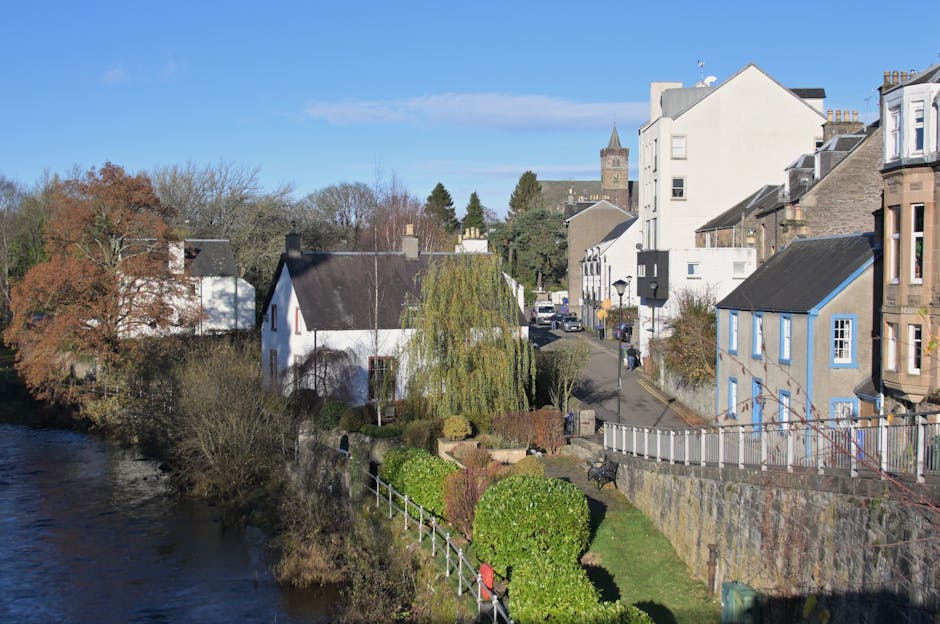
Situated right next to the Malieveld, this museum offers not only temporary exhibitions but also a miniature book library “Bibliotheca Thurkowiana Minor” created by Guus Thurkow. This collection shows 1515 miniature books. The library includes books about history and nature but also whole novels, such as Don Quixote who inspired Guus Thurkow and whose statue is part of the miniature library. You can watch a video about the library here (Dutch only).
The museum also offers insights into printing and you can print your own bookmark on an old printing press in the open printing atelier. Isn’t that amazing?
Museum Meermanno, Prinsessegracht 30, 2514 AP Den Haag
Opening times are:
Tuesday – Sunday: 11.00 – 17.00
https://www.meermanno.nl


I hope you enjoyed this trip to The Hague. Next month, we are going to explore another beautiful city in the Netherlands.

Planning more bookish day trips in the Netherlands? Here are my 5 places for book lovers in Haarlem.

A holiday for book lovers: Running a bookshop in Scotland

You always dreamed of running a bookshop without the risks and pressure of making a sell? Dream no further: Scotland has you covered. To be more precise – the national book town Wigtown where you can run a bookshop for 1-2 weeks via Airbnb.

The Open Book bookshop in Wigtown, Scotland – available to rent via Airbnb

It all started with a visit to a bookshop in Amsterdam last October where I discovered the book Diary of a Bookseller by Shaun Bythell. In his book, he tells what it is like to run a second-hand bookshop in Wigtown. While he mentions many positive moments, he also gives a rather realistic picture of his profession. He tells us about the challenges about selling books to and buying books from sometimes rather ignorant people. After reading his book, I decided to never buy books from Amazon ever again.

The Open Book – a unique idea

In this book, you also learn how Mr Bythell’s then-girlfriend had the idea for the Open Book. She enjoyed spending time in his bookshop and was sure that more people would like to know what it is like to run a bookshop. An idea was born and years later, the Airbnb is fully booked for years. You can book your very own bookish holiday for a maximum of two weeks. I had heard about this years ago but forgotten about it soon as it was fully booked. After finishing the Diary of a Bookseller, I had another look and couldn’t believe my luck: The first week of January was free. Our adventure of running a bookshop started on the 31st of December 2018.

Settling in at the bookshop

We arrived in Wigtown on December, 31st around noon and were greeted by a wonderful man, George. He showed us the shop and the flat and warned us that it will probably be quiet an. George made sure we would also take some time off. We were in Scotland and on vacation after all! After settling in, we were able to welcome quiet some visitors and customers. We got homemade shortbread, got to know the neighbours and made plans for our stay: we wanted to explore the area, add new books to the inventory, sort some bookshelves and I wanted to create a new chalkboard sign every day.

Part of the experience is also to write a blog about your stay. You can find ours here. We published three blog posts there and they are very detailed. Reading about past experiences made us realise how lucky we really were. We had booked the holiday in October 2018 and stayed with The Open Book at the end of December 2018. The average waiting time is more than 2 years. The owner of the building told us that there is a waiting list of over 700 people.

How to book your bookshop-holiday

I can only recommend this unique experience to everyone: You get to run a bookshop!! And you really feel like the owner. Of course, without the stress, uncertainties and difficulties, but it gives you a small insight into what the life of a bookseller can be. You can book the holiday via Airbnb. One night costs around 50EUR/58USD and the flat is amazing. It has everything you could wish for and is situated right above the shop.

Keep in mind that it is currently fully booked for three years. I can only advise you to randomly check because there are rare openings when someone cancels. You can also put yourself on the waiting list.

Once you get a spot, start getting excited. Gather ideas for your windows displays. Think about events you want to host. The town of Wigtown and its people are wonderful. Everyone really is as friendly and open as written in the reviews and you will feel at home from the moment you walk into the bookshop.

My personal highlight

The highlight of the whole experience was, apart from being surrounded by books all day long, working together with my boyfriend. He is more rational, realistic and down-to-earth while I started looking for property to bring the idea to the Netherlands on the second day. I also realised that working for myself is something I would like to experience at one point in my life. I left Scotland with a great sense of calm and excitement because I realised that 2019 will be my year. The feeling that anything is possible crept up on me while driving through the beautiful landscape. Knowing that something I’ve created made others laugh and even take photos of is something I will hold forever dear.

Would you like to try The Open Book and run a bookshop for a week?

More bookish travel, a little closer to home: my 5 places for book lovers in Den Haag.

9 novels I want to read in 2019

At the beginning of January, I shared 15 non-fiction books I want to read this year and I thought it would be a good idea to also share a list of fiction books that are on my list. My list is a mixture of recently published books I received for Christmas and books that are at least 5 years old. I like to read books that were published at different times – it makes me understand how literature has changed over the course of the years and which topics and themes once used to be popular and how contemporary literature helps to make a change. So here are nine novels I want to read this year.

1. I Know Why the Caged Bird Sings by Maya Angelou

Blurb: “Here is a book as joyous and painful, as mysterious and memorable, as childhood itself. I Know Why the Caged Bird Sings captures the longing of lonely children, the brute insult of bigotry, and the wonder of words that can make the world right. Maya Angelou’s debut memoir is a modern American classic beloved worldwide.
Sent by her mother to live with their devout grandmother in a small Southern town, Maya and her brother endure the ache of abandonment and prejudice. At eight years old and back at her mother’s side in St. Louis, Maya is attacked by a man many times her age – and has to live with the consequences for a lifetime. Years later, in San Francisco, Maya learns that love for herself, the kindness for others, her own strong spirit, and the ideas of great authors will allow her to be free instead of imprisoned. Poetic and powerful, I Know Why the Caged Bird Sings will touch hearts and change minds for as long as people read.”
ISBN: 978-0-345-51440-0

2. Howards End by E.M. Forster

Blurb: “On its publication in 1910 Howards End was instantly and widely recognized as a classic. “The word Forsterian is demanded,” wrote one reviewer. Another adjudged its author “likely to be one of our glories”, while a third considered that “if he never writes another line, his niche will be secure”. These forecasts have been amply justified.”
ISBN: 978-0-140-43175-9

3. The Circle by Dave Eggers

Blurb: “The Circle runs everything – all your internet activity in one easy, safe and visible place. No wonder it is now the world’s most powerful and influential company. So when Mae Holland lands a job at its glittering California campus, she knows she’s made it. But the more her ideals and ambitions become aligned with those of the Circle, the closer she comes to discovering a sinister truth at the heart of an organization seeking to remake the world in its image”.
ISBN: 978-0-241-97037-9

4. The Alice Network by Kate Quinn

Blurb: “1947. In the chaotic aftermath of World War II, American college girl Charlie St. Claire is pregnant, unmarried, and on the verge of being thrown out of her very proper family. She’s also nursing a desperate hope that her beloved cousin Rose, who disappeared in Nazi-occupied France during the war, might still be alive. So when Charlie’s parents banish her to Europe to have her “little problem” taken care of, Charlie breaks free and heads to London, determined to find out what happened to the cousin she loves like a sister.
1915. A year into the Great War, Eve Gardiner burns to join the fight against the Germans and unexpectedly gets her chance when she’s recruited to works as a spy. Sent into enemy-occupied France, she’s trained by the mesmerizing Lili, code name Alice, the “queen of spies”, who manages a vast network of secret agents under the enemy’s nose.
Thirty years later, haunted by the betrayal that ultimately tore apart the Alice Network, Eve spends her days drunk and secluded in her crumbling London house. That is until a young American barges in uttering a name Eve hasn’t heard in decades, and launches them both on a mission to find the truth … no matter where it leads.”
ISBN: 978-0-06-265419-9

5. The Devil and Miss Prym by Paulo Coelho

Blurb: “A community devoured by greed, cowardice and fear. A man persecuted by the ghosts of his painful past. A young woman searching for happiness. In one eventful week, each of them will face questions of life, death and power, and each of them will have to choose their own path. Will they choose good or evil?”
ISBN: 0-00-711604-7

6. A Horse Walks into a Bar by David Grossman

Blurb: “In a little dive in a small Israeli city, Dov Greenstein, a comedian a bit past his prime, is doing a night of stand-up. In the audience is a district court justice, Avishai Lazar, whom Dov knew as a boy, along with a few others who remember Dov as an awkward, scrawny kid who walked on his hands to confound the neighbourhood bullies. Gradually, as it teeters between hilarity and hysteria, Dov’s patter becomes a kind of memoir, taking us back onto the terrors of his childhood: we meet his beautiful flower of a mother, a Holocaust survivor in need of a constant monitoring, and his punishing father, a striver who had little understanding for his creative son. Finally, recalling his week at a military camp for youth – where Lazar witnessed what would become the central event of Dov’s childhood – Dov describes the indescribable while Lazar wrestles with his own part in the comedian’s story of loss and survival. Continuing his investigations into how people confront life’s capricious battering, and how art may blossom from it, Grossman delivers a stunning performance in this memorable one-night engagement (jokes in questionable taste included).”
ISBN: 978-1-5247-1137-5

7. Dear Mrs Bird by AJ Pearce

Blurb: “London 1941. Amid the falling bombs Emmeline Lake dreams of becoming a fearless Lady War Correspondent. Unfortunately, Emmy instead finds herself employed as a typist for the formidable Henrietta Bird, the renowned agony aunt at Woman’s Friend magazine. Mrs Bird refuses to read, let alone answer, letters containing any form of Unpleasantness, and definitely not those from the lovelorn, grief-stricken or morally conflicted.
But the thought of these desperate women waiting for an answer at this most desperate of times becomes impossible for Emmy to ignore. She decides she simply must help and secretly starts to write back – after all, what harm could that possibly do?”
ISBN: 978-1-5098-5392-2

8. Billy Budd by Herman Melville

Blurb: “Herman Melville’s short stories, somewhat neglected during his lifetime, today are considered to be among the small masterpieces of American fiction. His imagination is inventive, ironic, and extraordinarily attuned to our times. His settings and themes are various: the limits of artistic creation; the opposition of innocence and evil; fear of isolation; the inviolate sanctity of the human heart; the fearfulness of and fascination with the “enchanted isles”; the ferocity of the white whale; Calvinist hell-fire and damnation.”

ISBN: The edition is from before 1970, when ISBNs were introduced.

9. The Stars’ Tennis Balls by Stephen Fry

Blurb: “For Ned, 1980 seems a blissful year. Handsome, charming, popular and talented, his life is progressing smoothly, effortlessly, happily. And when he meets the lovely Portia Fendeman his personal jigsaw appears complete. But timing is everything in life, and his life is about to change forever.”
ISBN: 978-0-099-47155-4

Which books do you want to read this year? Have you read any of the books from my list?