Manfred mi Amor is out. I read an early manuscript in spring; now the finished Hamburg dating novel is here. What held up, what surprised me, and who should read it.
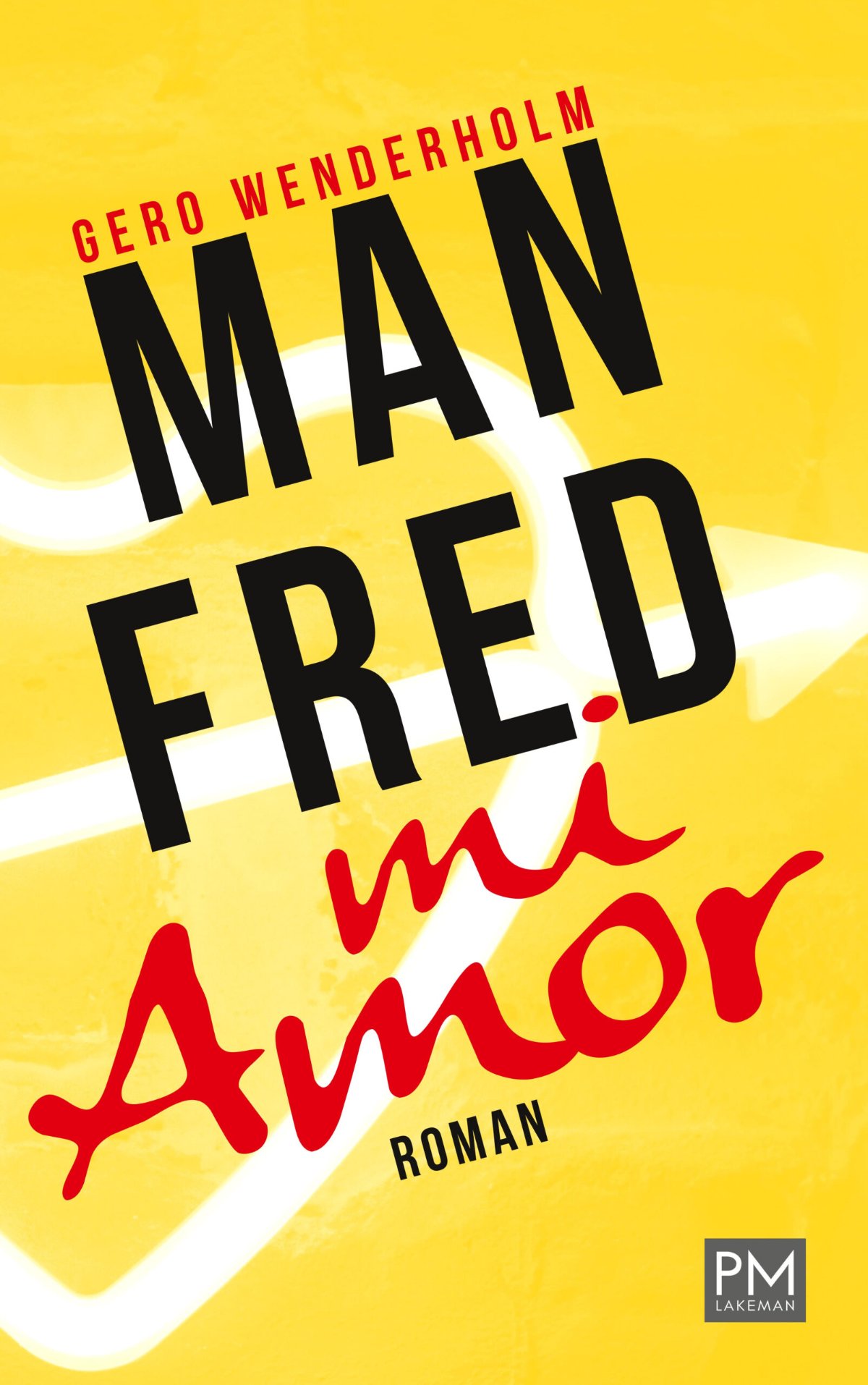
In April I wrote about a manuscript. It arrived as three PDFs with page headers, no cover, no blurb, and I read it on my laptop over two evenings and a train ride, which is not how I like to read anything. I still said it was one of the funniest things about dating I had come across in a long time. Last week the actual book turned up: yellow, loud, with the title in red brush lettering across the front, and I did what I always do with books I already know. I pretended I did not know them and started again from page one.
What has changed since the manuscript
Less than I expected, and that is a compliment. The setup is the same. A long-term single in Hamburg’s St. Pauli district, late thirties, IT support from his kitchen table, wakes up on a hungover November Sunday to find a small, naked, scruffy creature sitting on top of the wardrobe his ex left behind. It introduces itself as his personal Cupid and announces that it is going on strike. The two of them end up in a dating duel: one week his way, with three fake profiles, a spreadsheet of 186 names and a copy-and-paste opening message that goes out to eighty women (one of them with the placeholder still in it), then one week Manfred’s way, which involves a newspaper lonely-hearts ad and 67 perfumed letters. Whoever finds love first is rid of the other.
What the finished book makes clearer is the shape. It is one novel in three parts, and the publisher is right to say each part stands on its own. Part one is the duel. Part two is a real relationship with a woman who is better than the narrator at almost everything, including cheating at board games. Part three starts with a repossession notice and ends somewhere I will not describe. Time passes between the parts, the narrator ages, and Manfred changes with him: from heckler to coach to something I only understood on the last two pages, which switch to a different vantage point and sent me straight back to the beginning. The publisher’s page describes narrator and Cupid as two extremes of one personality. Read the ending with that in mind.
Why it works
Hamburg, mostly. I have rarely read a comic novel this precisely located. Park Fiction, the Millerntor stadium on a bad afternoon, the Christmas ice rink at Planten un Blomen where a grown man ends up clinging to a plastic giraffe meant for toddlers, a knitting café in Eimsbüttel full of pensioners with better stories than anyone on Tinder, a wedding venue outside Lübeck with a petting zoo that heckles the entertainer. The city is not a backdrop here, it is the thing that keeps rescuing the plot. And the scenes are built properly: a vegan cooking class, a bachata lesson, a Friday with three dates stacked on top of each other, each one with a setup, an escalation and a payoff.
Underneath the jokes there is a quieter book about a man who has outsourced responsibility for his own life, first to a spreadsheet and then to a figure on a wardrobe. The moment in part two when he admits that is written without a single gag, and the book is better for it.
What you should know before you buy it
It is in German, and there is no English edition. The humour is loud and often crude: hangovers, bodily functions, a full page set in a harbour boat toilet. If you winced at that sentence, this is probably not your book. The pop culture references come from someone who grew up in the eighties and nineties, and some of the rants (about joggers, about suburban housing estates) run a page longer than they need to. The women in the first part are mostly types, which is partly the point, since the narrator is the one being exposed, but it took me until the second part to find a female character I would want to have a drink with.
Why you should read it anyway
Because it is honest about something most dating novels tidy up: that the person swiping is usually the problem, and that knowing this does not help. Because it earns its tenderness instead of announcing it. And because the ending reframes everything you have read, which is a trick very few comic novels even attempt.
If you read German and want to know what else is being written about dating over there, I put together a list of German dating novels worth translating earlier this year. This one is still the one I would hand to a translator first.
Have you read it, or are you waiting for an English edition? Tell me in the comments. I would also like to know whether anyone else turned back to page one after the last chapter.
Title: Manfred mi Amor Author: Gero Wenderholm Publisher: PMLakeman-Verlag, 2026 Pages: approx. 392, paperback ISBN: 978-3-911187-08-4 Language: German Setting: Hamburg, St. Pauli
Fifty book club questions that work for any novel or non-fiction title, sorted by what you want to talk about. Tested in my own two book clubs.
Last month one of my book clubs spent forty minutes on the question of whether the main character would have made a good flatmate. It was a lovely evening and we said almost nothing about the book. I came home and thought: next time I am bringing questions. Years ago I wrote nine tips for a successful book club, and tip number five was exactly this, have some questions ready. I never wrote them down. So here they are, fifty of them, sorted by what you might want to talk about. They work for a novel, a memoir or a biography.
Questions to open the evening
What did you expect from this book before you started, and did it deliver?
Where were you when you read most of it?
Did you read it in one go or in small portions?
Which page or scene made you decide to keep going?
Was there a point where you nearly gave up?
If you had to describe the book in one sentence to a friend, what would you say?
Did the cover or the title promise something the book did not keep?
Who would you give this book to, and who would you keep it from?
What is the first word that comes to mind now that you have finished?
Did you look anything up while reading?
Questions about the people in the book
Which character did you understand best, and which one not at all?
Who would you have liked more of?
Did anyone change over the course of the book, or did only your view of them change?
Was there a character you disliked at first and warmed to later?
Which decision in the book would you have made differently?
Is the narrator telling you the whole truth?
Who holds the power in this story, and does that shift?
Would you have been friends with the main character?
Did any of the relationships feel familiar from your own life?
If one character could read this book, how would they react to the way they are shown?
I asked question sixteen when we read James by Percival Everett, and it kept us busy for the rest of the night.
Questions about how it is written
How would you describe the voice of the book: warm, cold, funny, distant?
Did the length feel right?
Was there a sentence you wanted to write down?
How did the book handle time: did it jump, slow down, go in circles?
Did the structure help the story or get in its way?
Would the book work told from another point of view?
Was anything left out on purpose, and did that work?
How did the first page and the last page talk to each other?
Did the book trust you as a reader, or did it explain too much?
Is this a book you read for the plot or for the sentences?
Question thirty is the one that split my other club down the middle over Orbital by Samantha Harvey. Half of us did not miss a plot at all.
Questions about the world outside the book
What does the book say about the time it was written in?
Would it be a different book if it were set where you live?
Did it change your mind about anything, even slightly?
Which part of the book felt most true, and which least?
Did it remind you of another book, a film or a conversation?
What would you want to ask the author?
Did you learn something you did not expect to learn?
Is there a theme the author never names but that is clearly there?
Who is this book really for?
Would you have read it if nobody had chosen it for you?
Questions for the end of the evening
What will you remember about this book in a year?
Would you read something else by the same author?
Did the discussion tonight change how you feel about the book?
What did someone else say tonight that surprised you?
If the book had one more chapter, what would be in it?
What should the next book be, given how this one went?
Did the ending feel earned?
Who deserved a better ending?
Is this a book to keep, to lend or to give away?
On a scale from “I was polite about it” to “I have already bought a copy for someone”, where are you?
You do not need all fifty. I take five or six, write them on the back of an old bookmark and let the others pick. Oddly, the questions I think are weakest often open the best conversations. Which questions get your book club talking?
Five German dating novels I wish my English-reading friends could pick up: Berlin apps, a Hamburg Cupid, and a love story that takes thirty years.
Every couple of months a friend in London asks me the same thing: is there anything funny and German about dating that she could actually read? And every time I go through my shelf and come back with the same answer. Yes, plenty, but you would need to learn German first. So here is the list I keep sending her, in the hope that a translator or a publisher stumbles over it one day. These are five books about dating, written in German, and as far as I can tell not one of them has an English edition yet. I have checked, and I will check again before this goes live.
1. Isobel Markus: Dating-Roman
Two women in their mid-forties, one flat in Berlin, seven dates in one week. One of them is looking for someone who simply fits, the other one wants the opposite of commitment, and both of them learn more about themselves than about the men across the table. Markus writes in short, quick scenes that feel like being told the story over a glass of wine, and the book was picked as WDR 5’s book of the week in the summer of 2024. It was published by mikrotext, a small Berlin press, which is probably one reason nobody abroad has noticed it yet.
2. Anika Decker: Zwei vernünftige Erwachsene, die sich mal nackt gesehen haben
The title translates roughly as “Two sensible adults who once saw each other naked”, and that already tells you the tone. Decker wrote the screenplays for some of the biggest German romantic comedies of the last twenty years, and this is her first novel: Nina, forty-nine, divorced with two children, falls for David, who is twenty-nine, and has to work out whether that is a midlife crisis or simply her life. It is sharper than the cover suggests, with a side plot about power in the film business that hits harder than the jokes.
3. Julia Karnick: Man sieht sich
If you liked One Day, this is your book. Robert falls for Frie in 1988 when he joins her class at a school in Hamburg, and for the next thirty-five years the timing is always wrong, right up to the class reunion in 2022. It was a Spiegel bestseller in Germany, it is set between Hamburg and the Baltic coast, and it has the kind of long, patient structure that translates well because it does not depend on wordplay. The title means “See you around”, which is exactly what these two keep saying to each other.
4. Anna Dushime: 1000 letzte Dates
Strictly speaking this is the one non-novel on the list, so forgive me for cheating. Dushime, a journalist and presenter in Berlin, went back to dating apps after twelve years and a separation, as a single mother in her mid-thirties, and wrote down what happened, from a McDonald’s car park to bars in Berlin to a trip to Kigali. What makes it worth translating is not the dates themselves but what she does with them: the book turns into an argument about why the standard two-person relationship might not be the goal at all. It came out in autumn 2025 and started a proper discussion here.
5. Gero Wenderholm: Manfred mi Amor
The newest title on the list, out on 22 October 2026 with a small independent publisher, PMLakeman-Verlag, and the only one of the five told from a man’s point of view. Our narrator is dating his way through St. Pauli, in real bars and on real streets you could visit tomorrow, with his own personal Cupid called Manfred as a second voice in his head, commenting on every swipe and every awkward silence. I read an early copy in spring and wrote about it here; it is a comic novel first and a love story second, and the Hamburg setting alone deserves an English audience.
Why none of these has crossed the Channel yet
I have my theories. Comedy is hard to sell in translation, the German book market is big enough that publishers do not need to look abroad, and dating novels from Germany are not what foreign editors expect to find in Frankfurt. Still, three of these five are about people over forty trying again, which is not exactly a niche audience in Britain either.
If you read German, all five are easy to find. If you do not, and you happen to work in publishing, you know where to look. And if I have missed a German dating novel that you think belongs on this list, tell me in the comments. My friend in London is still waiting.
Six astronauts, sixteen orbits, one day. Why Samantha Harvey’s short Booker winner Orbital made me look up from my screen and out of the window.
I read Orbital in one sitting on a train from Utrecht to Groningen, which is roughly two hours, and I remember looking up somewhere past Zwolle and feeling slightly offended that the landscape was so flat. The book had just shown me the Himalayas from four hundred kilometres up. Samantha Harvey’s novel is short, 136 pages in the hardback, and it does something I did not expect from a Booker winner: it slowed me down. After the sheer energy of James by Percival Everett, this felt like the opposite kind of book, and I needed it.
Why I picked it up
I had been circling Orbital since it won the Booker Prize in November 2024. The premise sounded like something I would admire more than enjoy: six astronauts and cosmonauts on the International Space Station, one day, sixteen orbits, no aliens, no disaster, no plot to speak of. I am not a space person. I have never watched a rocket launch on purpose. What finally convinced me was a friend who said, a little impatiently, that it is not a book about space at all. She was right. It is a book about looking at the Earth.
What it is about
Each chapter is one orbit of ninety minutes. The crew of six come from Japan, the United States, Britain, Italy and Russia, and Harvey gives them names and histories but not much in the way of drama. Chie, the Japanese astronaut, learns that her mother has died and cannot go home. A typhoon builds over the Pacific and the crew watch it from above, knowing people they care about are underneath it. In between there are experiments with mice, exercise routines, meals from pouches, and a great deal of silence. The sentences loop and gather and sometimes run for half a page, and I found that the only way to read them was to stop skimming. That is harder than it sounds when you spend your working day reading in fragments.
I will not pretend it is a page-turner. It is a page-lingerer, if that is a word. There were moments when I wanted a little more friction between the characters, and readers who need a story that goes somewhere may put it down. But Harvey apparently wrote most of it during lockdown, watching live footage of the Earth from orbit on her screen, and you can feel that odd combination of confinement and enormous view on every page.
Why you should read the book
Because it is 136 pages, and in those pages it manages to make the planet feel both very small and unreasonably precious, without once lecturing you about the climate. Harvey trusts the view to do the work. I have read plenty of books that told me to pay attention to the world; this one just quietly made me do it. I closed it, put my phone in my bag, and watched the fields go by until Groningen, which, given how I feel about screens these days, is about the highest praise I have for a novel.
If you are the sort of reader who needs something to happen, read it anyway, but read it slowly, and preferably with a window. Have you read Orbital? I would love to know whether it worked for you, or whether you were waiting for the plot the whole way through.
Five Leiden spots I keep going back to: a free book attic, two bookshops facing each other on Breestraat, and a library with a decent coffee bar.
Leiden was never meant to be a bookshop trip. I went for the Rijksmuseum van Oudheden on a grey Saturday, got rained on between the station and the Breestraat, and ducked into the first doorway with a dry floor and something to read. Two hours later I had a paper bag with three novels I had not planned to buy and a vague sense that the museum could wait. That happens to me a lot in this town. After writing up Amsterdam, Leiden felt like the obvious and much calmer next stop. Opening times are as I found them in September 2026; do check before you travel, because Dutch shops love a Monday afternoon start.
1. Mayflower Bookshop: the international bookshop
Breestraat 70 is where I dried off that first time, and it has become my default. Mayflower sells new and second-hand books side by side, mostly in English. The second-hand shelves are the part I like best: prices are fair, the stock turns over, and there is a three-for-two deal I have never once resisted. It also runs lecture series and reading groups, so some evenings it is more living room than shop. They opened a second branch on Lange Poten in The Hague in 2021, one more reason my Den Haag guide is overdue an update. Mondays they open at noon.
2. De Slegte: the second-hand and remainder shop
Almost directly opposite, at Breestraat 73, is De Slegte. If Mayflower is the living room, De Slegte is the attic of a well-read aunt: used books and ramsj, the Dutch word for remainders, restocked every day, which is why the regulars come in weekly. The English section is large by Dutch standards. I have found paperback thrillers for a couple of euros and a heavy art book I had no business carrying home on the train. Give yourself time here. Nothing is arranged for a quick in and out, and that is the point.
3. Boekhandel Kooyker: the proper bookshop
A few doors along at Breestraat 89 is Kooyker, the kind of established bookshop every university town needs. It leans academic, with serious non-fiction and the journals that go with a student population, but there is an English top ten by the till and the staff know their fiction. This is where I go for the new hardback rather than the lucky find, and where I check the events board: in autumn it fills up with children’s book week and the history month. Closed on Sundays, like most shops on this street.
4. De Boekenzolder: the free book attic
This one is outside the centre, on the Admiraal Bankertweg, and it is the place I tell people about first. De Boekenzolder is a charity run entirely by volunteers, and every book in it is free. You browse an attic’s worth of donated books in Dutch, English and a surprising range of other languages, and take up to ten stamped copies home. Donations are welcome, and I always leave some, because the alternative is that this place disappears. It is only open Thursday to Saturday afternoons, one until half past four, with a handful of closing days through the year, so plan the visit. Bring a bag. Bring a bigger bag than you think.
5. Bibliotheek Leiden: the public library with a coffee bar
When I have bought too much and need to sit down, I walk to Nieuwstraat 4. The central library is run by BplusC, which bundles it with a music school and cultural centre, so the building is busier and more mixed than a library usually is. There are work tables with free wifi and a small coffee bar where I have read half a novel over one flat white. Thursdays it stays open until nine, my favourite time: the students have thinned out and the building goes quiet. Sundays it is closed.
A walk between the shelves
The thing about Leiden is that the books do not stop at the shop doors. Since 1992 the city has painted more than a hundred poems on its walls, in Russian, Spanish, English, Chinese and many other languages, and once you know they are there you see them everywhere. It makes the town feel like it was built by readers, which, given the university has been here since 1575, it more or less was.
If you have done Amsterdam and Haarlem, put Leiden next. And if you know a shelf I have missed, I would like to hear about it. There is always room in the bigger bag.
For months, people kept telling me to read James. Three different people whose taste I trust, independently of each other. I resisted anyway, because retellings and I have a complicated history. Too often they lean on the original like a crutch and add nothing of their own. Then I finally gave in, and you can probably guess how this ends: James is the best book I have read this year, and it is not close.
What James is about
James tells the story of Adventures of Huckleberry Finn, but this time we hear it from Jim. Or rather from James, which is the whole point. The enslaved man who drifts through Twain’s novel as a kind-hearted sidekick gets his own voice here, and what a voice it is: educated, dry, precise. And hidden. Around white people, James speaks exactly the way they expect him to speak, and the gap between how he talks and how he thinks creates more tension than most thrillers I know. We read Twain at school in German translation, and I mostly remember the whitewashed fence and nothing at all about Jim. Which is, I think, exactly the point Everett is making.
What surprised me most is how funny this book is. Really funny, in the middle of horror, and Everett never lets one cancel out the other. There is a scene about getting hold of a pencil, just a pencil, that carries more weight than entire chapters of other novels. I had to put the book down a few times to breathe. I mean that as the highest compliment I can give.
Why you should read the book
You do not need to know Huckleberry Finn. James stands completely on its own. If anything, it made me want to go back to the original and argue with it. The book has won more or less every prize there is, including the Pulitzer, and for once I have no objections at all.
The books that stay with me longest are the ones that make me sit with a perspective I do not live in. They Can’t Kill Us All by Wesley Lowery did that with journalism. James does it with fiction, and it reminded me why I believe that authors can change the world, one reader at a time.
Have you read it? Please tell me in the comments, because I finished it weeks ago and I still need to talk about it.
Update, October 2026: if you want the quiet counterpart to this book, I wrote about Orbital by Samantha Harvey, the Booker winner that followed James and could not be more different.
Amsterdam and books, for me that is a love story with a very concrete starting point. A few years ago I was in the city for a day, it started raining (of course it did), I fled into the nearest bookshop and walked out with Diary of a Bookseller by Shaun Bythell. That one impulse buy later sent me all the way to Scotland to run a bookshop myself for a week. So you could say Amsterdam bookshops have a lot to answer for.
After my lists for The Hague and Haarlem, Amsterdam was overdue anyway. All five places are in the city centre, you can easily walk from one to the next, and together they make a perfect plan for a rainy day. So: for most days.
1. The American Book Center: book shop
Let me start with my favourite. The American Book Center on the Spui sells English books only, three floors of them, and has been run by the same family since 1972. What gets me every time are the handwritten staff recommendations tucked between the shelves. Last time I went in to buy one specific book as a present. I left 45 minutes later with three books for myself and without the present. It is that kind of shop.
2. Athenaeum Boekhandel: book shop and news centre
Directly next door. Which is dangerous. Athenaeum is the more serious, more beautiful sibling: international literature, art books, translated fiction you will not stumble over anywhere else. Attached to it is the Athenaeum Nieuwscentrum with newspapers and magazines from all over the world. When I had just moved to the Netherlands and missed reading in my own language, a shop like this felt like a small lifeline. It still does, a bit.
3. Waterstones: book shop
Yes, a British chain, I know. I do not care!! Four floors in a gorgeous old building on Kalverstraat, and nobody looks at you strangely if you sit down in a corner with a pile of books and stay there. The children’s section upstairs is the best I have seen in this country. If you need a present for a small reader, this is where you go.
4. The Book Exchange: second-hand book shop
A canal-side second-hand shop on Kloveniersburgwal, in business since 1978, with tens of thousands of English titles sorted into wonderfully specific categories. It smells exactly the way an old bookshop should smell. I normally have a rule not to buy more books than I can carry home comfortably. This shop is where that rule goes to die.
5. Scheltema: book shop and café
The largest bookshop in the Netherlands, right on the Rokin: five floors, a couple of hundred thousand books, its own café and even a floor with second-hand books. Most of it is Dutch, but the English sections are big enough to keep you busy for a long while. My routine: collect a small tower of candidates, carry it to the café, order a coffee and pretend I will only buy half of them. I never do.
And because I apparently cannot count to five: Evenaar on the Singel sells nothing but travel literature, and Architectura & Natura on Leliegracht is the place for architecture and nature books. Both small, both lovely.
Have I missed your favourite place in Amsterdam? Tell me in the comments. My list of reasons to go back is already long, one more will not hurt. Update, September 2026: if you fancy a quieter day out, I have since written up five places for book lovers in Leiden, half an hour down the line.
An exclusive early look at Gero Wenderholm’s debut novel Manfred mi Amor – a hilarious, heartfelt comedy about modern dating, apps, spreadsheets, and a very unconventional Amor. Published October 2026 by PMLakeman-Verlag.
Have you ever tried to optimise your love life with a spreadsheet? Or sent the exact same opening message to seventeen different people on a dating app, convinced that A/B testing your way to romance was a perfectly reasonable strategy? If even a tiny part of you has nodded along just now, then Manfred mi Amor was written for you. And yes, I mean that as a compliment.
I was lucky enough to get an exclusive early look at this debut novel by Hamburg-based author Gero Wenderholm, and I have to say: it is one of the most fun, unexpectedly moving, and thoroughly modern takes on the chaos of dating that I have read in a very long time. Manfred mi Amor came out in October 2026, and if you are even remotely interested in funny books about love, romantic comedies with real heart, or simply a good laugh at the absurdity of modern dating culture, put this one on your radar right now.
This year, I have decided to not set any goals for my online shop or any other business/ project I have and to just do whatever I feel like doing in my free time. Since I have made that decision, I find myself reading more than I used to last year and it makes me very happy. Finding new stories, listening to unknown voices and learning is something I thoroughly enjoy. So here are the books I read in February:
For the last six or seven years, I have been reading more and more non-fiction books. They are, for me, the perfect way to learn about a new topic without getting lost in too much information or an abundance of webpages. In February, I read eight non-fiction books:
Smoke Gets In Your Eyes & Other Lessons from the Crematory by Caitlin Doughty
Caitlin Doughty tells about her work as a mortician and crematory employee. While the book provides detailed descriptions of what happens to you once you are dead, the book also points out how detached we are, as a Western society, from death and dead people. Doughty makes a case for letting death and talking about it become a part of our lives, thus making the thought of dying and everything that comes with it less scary and taboo. Doughty also has a youtube-channel called Ask a Mortician where she answers questions and gives more insight into her work. I will write a more detailed review of this book as I feel it raised a lot of thoughts and things I would like to write about.
Bleaker House by Nell Stevens
The book has a subtitle: How Far Would you Travel to Become a Writer? And Nell Stevens sets out to answer this question with a trip to the Falkland Islands. More specific Bleaker Island. A place where roughly two people live, next to animals and nothing else. Stevens, aching to write a novel, applies for a scholarship that allows her to spend time anywhere she wants. And while her colleagues choose Spain, Indonesia, or Sweden – Stevens wants to spend her time far, far away from anyone. She spends three months on the Falkland Islands and tries to write the novel that would make her name. I enjoyed reading her book because I read it at a time during which I also longed for solitude. No internet, no human interaction, no distractions and I could relate a lot to her wish and hopes. But also because the idea of being so far off the grid just sounds amazing and I would love to do it one day. It also made me wonder how many really remote places there are still in the world. Untouched nature, wilderness, and stillness.
The Nature About Nature. Why We Need the Wild by Enric Sala
Encouraged by Steven´s book, I started reading Sala´s book by the end of the month. Sala, the founder of The National Geographic Pristine Seas project, explains why we, as humans, need wild animals, untouched seas, and more protected nature. It shows the connection between ecological diversity and economical success. While the book paints a rather dark picture of the future and the impact humans have on animals and nature, it also shows what has to be done to make a change and to stop the destruction of our planet. Reading the book made me want to learn more about our nature, and projects that fight for more protected oceans. But also, to understand how I can make a difference and put pressure on politicians. I will keep you updated on this and write a more detailed review of the book.
What We´re Told Not to Talk About (But We´re Going to Anyway) by Nimko Ali
Orgasms, periods, menopause, pregnancy – four topics the majority of women do not talk about on a regular basis, if at all. In her book What we´re told not to talk about (but we´re going to anyway) Nimko Ali sets out to listen to women from “East London to Ethiopia” tell their story and what it means to be pregnant or have your first orgasm. I did enjoy reading the book, mostly because it led to good conversations with my boyfriend and my friend Jule. However, it was lacking intersectionality and it did leave me with a bitter taste about womanhood and what it means to be a woman. You can read my review here.
Was weiße Menschen nicht über Rassismus hören wollen aber wissen sollten by Alice Hasters and exit RACISM by Tupkoa Ogette
I found the books by Hasters and Ogette very similar, and equally important. Both women write about racism, in Germany but also in society as a whole. The books are aimed at white readers and how we, as white people, need to finally acknowledge our privileges. Hasters and Ogette share very personal experiences with Anti-Black racism and how it has, and still is, impacting their lives. I can recommend both books to anyone who wants to leave their privileged “Happyland”, as Ogette calls it, and make the world a fairer world by understanding how we are all socialized in a racist society.
Anti-Racist Ally. An Introduction to Action & Activism by Sophie William
Sophie William´s book is a very short, yet precise, introduction to terms about racism. You can read it in less than an hour and it is recommended to anyone who is not familiar with terms such as “race pay gap”, “tone policing” and “redlining”. Every week, Williams asks her Instagram-followers what they have done that week to fight racism. A question we must ask ourselves!
The 5 AM Club by Robin Sharma
And now to the worst book, I have read so far ever: The 5 AM Club by Robin Sharma aka The Monk Who Sold His Ferrari. Uagh. I absolutely hated this book for several reasons and it sparked a whole blog series I am about to start this month. So look out for it if you want. I will also write a review of this book and what I think is wrong with it. Until then, let me just say, that I found the book even worse than Jordan B. Peterson´s 12 Rules for Life and that means a lot.
Review Fiction books
A Little Life by Hanya Yanagihara
I got this book from my dear friend Jule and she said it was one of her reading highlights last year, so I was of course curious. And boy, the book did not disappoint. I found myself rushing through the pages, wanting to know what will happen next. I even cried at times as the words touched me so much. A little Life – many say it is the story of four friends and their life. While this is true, the story is mostly about violence, abuse, and how to live with it. Some people call it “violence porn” and I understand why. However, I think you can read graphic violence and still call the book “a good book”. It is also a book that many people either hated or loved. It seems like there is nothing in between.
S (Ship of Theseus) by J.J. Abrams and Doug Dorst
This book has been on my shelves for years and it always felt intimidating to me. But I have read it now for my book club and can say that I am happy I finally did. Not because I enjoyed it tremendously, but because it is a whole different reading experience. You basically read two stories: S (the main story) and The Ship of Theseus which takes place in the margins of the book: a conversation between two readers, strangers at first who connect through the book S, and the search for the author´s identity. The book contains postcards, letters, drawings, and maps – all adding to the reading experience. Or taking your attention away from the story. The book raises questions such as “Can you separate work from the author?”, “How much of the own life does a writer really add to a story?” and most interesting to me “Is it necessary to know anything about the author to understand its work?”. We will have the book club discussion next weekend and I am curious o hear what my friends think about it.
The 57 Bus by Dashka Slater
This book read like a lengthy newspaper article. It is based on a true story about a crime that took place in 2013: Sasha, 18 years old and identifying as agender, is riding a bus, sleeping when Richard sets their skirt on fire. The book tells about Sasha´s identity and raises the question if Richard´s crime was a hate crime. And while the book does not give a clear answer, I found it interesting to think about how media portrays crime, in general, but also in this particular case.
Transcendent Kingdom by Yaa Gyasi
This was the first book I read by Gyasi and I absolutely enjoyed it. Gyasi tells the story of a mother and daughter. A family torn apart, but united at the same time, by drugs and depression. A father who leaves the family, a daughter who is trying to keep her mother alive while finding her way in an academic world. I enjoyed the way it was written and that it touched upon so many different topics in a raw, honest way.
Im Park der prächtigen Schwestern (Las Malas) by Camila Sosa Villada
Another book I´ve read for one of my book clubs. Sosa Villada tells the story of trans women in Argentina in the late 1980s and 90s. The book feels very realistic at times. I guess that is the case because Camila Sosa Villada herself is a trans woman who experienced many things mentioned in the book. I enjoyed the story but I did not fully enough the way of writing. The magical realism-passages felt out of place to me, but some of my friends really liked them. The book is full of violence, heart brake and tales of prostitution and survival. It definitely gives insight into a world that is very different from what my life looks like and opened my eyes further to what others have to suffer from for just being themselves.
Open Water by Caleb Azumah Nelson
The debut novel of photographer Caleb Azumah Nelson was my favourite fiction book this month. It tells the story of two friends falling in love. Nothing special you might think. But it is – the book, only roughly 140 pages long, is so full of heartbreak and emotions. It tells the story of an unnamed person falling in love with a woman. And while love is central, the story is also about what it means to be a Black man living in London, experiencing racial profiling, losing friends, and finding his own way. The language of Nelson is almost poetic, raw, and just beautiful. I am sure this is a book I will read again and give as gifts to my friends.
Have you read any of the books? What have you read in the last weeks?
I do not often read books that make me feel slightly embarrassed about how little I know. But What We’re Told Not to Talk About (But We’re Going to Anyway) by Nimko Ali did exactly that – and I am grateful for it.
Nimko Ali is a Somali-British activist and one of the most prominent voices campaigning to end female genital mutilation (FGM). This book is part memoir, part manifesto, and entirely honest. She writes about her own experience of FGM as a child, about the silence and shame that surrounds it, and about what it has taken – personally and politically – to keep speaking about it anyway.
The title says it all, really. There are things we do not talk about – in families, in communities, in public life – because they are uncomfortable, because they challenge the way things are, because speaking up has a cost. Nimko Ali pays that cost again and again, and she does it with warmth, humour, and an absolute refusal to be quiet.
What struck me most was the tone. I expected something more clinical or angry – and while there is righteous anger here, there is also a lot of joy and personality. Ali is funny. She is self-aware. She writes about her community with both love and clear-eyed criticism. And she insists throughout that this is not a problem confined to one culture or one religion – the silencing of women’s bodies, women’s pain, women’s voices is everywhere.
This is not an easy read in the sense that it is comfortable – it is not meant to be. But it is readable, it is human, and it is important. I finished it in two days and I have been thinking about it ever since.
Who should read it: Everyone, honestly. But especially people who want to understand the intersection of culture, politics, and women’s rights through one woman’s deeply personal story.