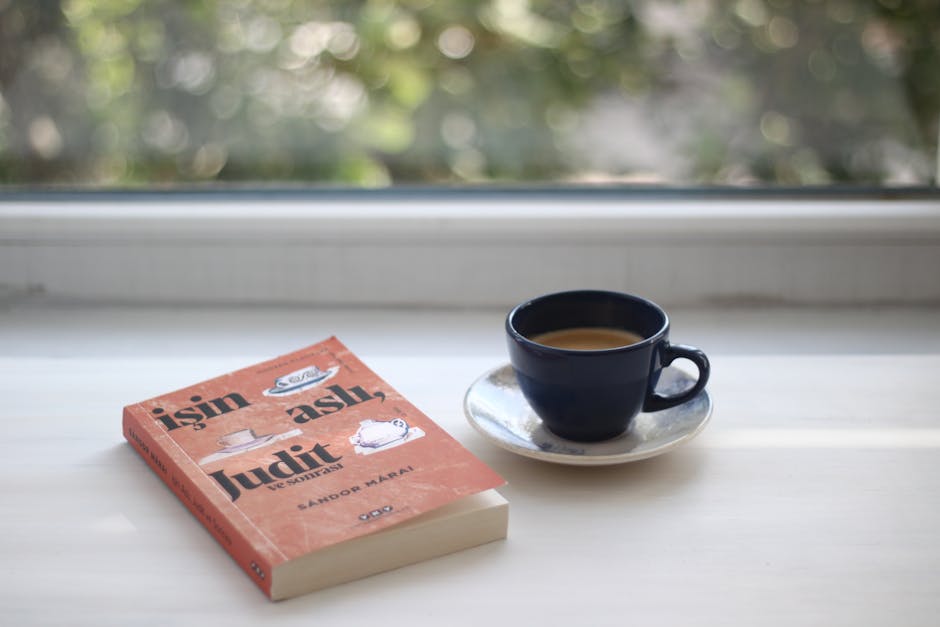
For months, people kept telling me to read James. Three different people whose taste I trust, independently of each other. I resisted anyway, because retellings and I have a complicated history. Too often they lean on the original like a crutch and add nothing of their own. Then I finally gave in, and you can probably guess how this ends: James is the best book I have read this year, and it is not close.
What James is about
James tells the story of Adventures of Huckleberry Finn, but this time we hear it from Jim. Or rather from James, which is the whole point. The enslaved man who drifts through Twain’s novel as a kind-hearted sidekick gets his own voice here, and what a voice it is: educated, dry, precise. And hidden. Around white people, James speaks exactly the way they expect him to speak, and the gap between how he talks and how he thinks creates more tension than most thrillers I know. We read Twain at school in German translation, and I mostly remember the whitewashed fence and nothing at all about Jim. Which is, I think, exactly the point Everett is making.
What surprised me most is how funny this book is. Really funny, in the middle of horror, and Everett never lets one cancel out the other. There is a scene about getting hold of a pencil, just a pencil, that carries more weight than entire chapters of other novels. I had to put the book down a few times to breathe. I mean that as the highest compliment I can give.
Why you should read the book
You do not need to know Huckleberry Finn. James stands completely on its own. If anything, it made me want to go back to the original and argue with it. The book has won more or less every prize there is, including the Pulitzer, and for once I have no objections at all.
The books that stay with me longest are the ones that make me sit with a perspective I do not live in. They Can’t Kill Us All by Wesley Lowery did that with journalism. James does it with fiction, and it reminded me why I believe that authors can change the world, one reader at a time.
Have you read it? Please tell me in the comments, because I finished it weeks ago and I still need to talk about it.
An exclusive early look at Gero Wenderholm’s debut novel Manfred Mi Amor – a hilarious, heartfelt romantic comedy about modern dating, apps, spreadsheets, and a very unconventional Amor. Due out summer 2026.
Have you ever tried to optimise your love life with a spreadsheet? Or sent the exact same opening message to seventeen different people on a dating app, convinced that A/B testing your way to romance was a perfectly reasonable strategy? If even a tiny part of you has nodded along just now, then Manfred Mi Amor was written for you. And yes, I mean that as a compliment.
I was lucky enough to get an exclusive early look at this debut novel by Hamburg-based author Gero Wenderholm, and I have to say: it is one of the most fun, unexpectedly moving, and thoroughly modern takes on the chaos of dating that I have read in a very long time. Manfred Mi Amor is due out in summer 2026, and if you are even remotely interested in funny books about love, romantic comedies with real heart, or simply a good laugh at the absurdity of modern dating culture, put this one on your radar right now.
This year, I have decided to not set any goals for my online shop or any other business/ project I have and to just do whatever I feel like doing in my free time. Since I have made that decision, I find myself reading more than I used to last year and it makes me very happy. Finding new stories, listening to unknown voices and learning is something I thoroughly enjoy. So here are the books I read in February:
For the last six or seven years, I have been reading more and more non-fiction books. They are, for me, the perfect way to learn about a new topic without getting lost in too much information or an abundance of webpages. In February, I read eight non-fiction books:
Smoke Gets In Your Eyes & Other Lessons from the Crematory by Caitlin Doughty
Caitlin Doughty tells about her work as a mortician and crematory employee. While the book provides detailed descriptions of what happens to you once you are dead, the book also points out how detached we are, as a Western society, from death and dead people. Doughty makes a case for letting death and talking about it become a part of our lives, thus making the thought of dying and everything that comes with it less scary and taboo. Doughty also has a youtube-channel called Ask a Mortician where she answers questions and gives more insight into her work. I will write a more detailed review of this book as I feel it raised a lot of thoughts and things I would like to write about.
Bleaker House by Nell Stevens
The book has a subtitle: How Far Would you Travel to Become a Writer? And Nell Stevens sets out to answer this question with a trip to the Falkland Islands. More specific Bleaker Island. A place where roughly two people live, next to animals and nothing else. Stevens, aching to write a novel, applies for a scholarship that allows her to spend time anywhere she wants. And while her colleagues choose Spain, Indonesia, or Sweden – Stevens wants to spend her time far, far away from anyone. She spends three months on the Falkland Islands and tries to write the novel that would make her name. I enjoyed reading her book because I read it at a time during which I also longed for solitude. No internet, no human interaction, no distractions and I could relate a lot to her wish and hopes. But also because the idea of being so far off the grid just sounds amazing and I would love to do it one day. It also made me wonder how many really remote places there are still in the world. Untouched nature, wilderness, and stillness.
The Nature About Nature. Why We Need the Wild by Enric Sala
Encouraged by Steven´s book, I started reading Sala´s book by the end of the month. Sala, the founder of The National Geographic Pristine Seas project, explains why we, as humans, need wild animals, untouched seas, and more protected nature. It shows the connection between ecological diversity and economical success. While the book paints a rather dark picture of the future and the impact humans have on animals and nature, it also shows what has to be done to make a change and to stop the destruction of our planet. Reading the book made me want to learn more about our nature, and projects that fight for more protected oceans. But also, to understand how I can make a difference and put pressure on politicians. I will keep you updated on this and write a more detailed review of the book.
What We´re Told Not to Talk About (But We´re Going to Anyway) by Nimko Ali
Orgasms, periods, menopause, pregnancy – four topics the majority of women do not talk about on a regular basis, if at all. In her book What we´re told not to talk about (but we´re going to anyway) Nimko Ali sets out to listen to women from “East London to Ethiopia” tell their story and what it means to be pregnant or have your first orgasm. I did enjoy reading the book, mostly because it led to good conversations with my boyfriend and my friend Jule. However, it was lacking intersectionality and it did leave me with a bitter taste about womanhood and what it means to be a woman. You can read my review here.
Was weiße Menschen nicht über Rassismus hören wollen aber wissen sollten by Alice Hasters and exit RACISM by Tupkoa Ogette
I found the books by Hasters and Ogette very similar, and equally important. Both women write about racism, in Germany but also in society as a whole. The books are aimed at white readers and how we, as white people, need to finally acknowledge our privileges. Hasters and Ogette share very personal experiences with Anti-Black racism and how it has, and still is, impacting their lives. I can recommend both books to anyone who wants to leave their privileged “Happyland”, as Ogette calls it, and make the world a fairer world by understanding how we are all socialized in a racist society.
Anti-Racist Ally. An Introduction to Action & Activism by Sophie William
Sophie William´s book is a very short, yet precise, introduction to terms about racism. You can read it in less than an hour and it is recommended to anyone who is not familiar with terms such as “race pay gap”, “tone policing” and “redlining”. Every week, Williams asks her Instagram-followers what they have done that week to fight racism. A question we must ask ourselves!
The 5 AM Club by Robin Sharma
And now to the worst book, I have read so far ever: The 5 AM Club by Robin Sharma aka The Monk Who Sold His Ferrari. Uagh. I absolutely hated this book for several reasons and it sparked a whole blog series I am about to start this month. So look out for it if you want. I will also write a review of this book and what I think is wrong with it. Until then, let me just say, that I found the book even worse than Jordan B. Peterson´s 12 Rules for Life and that means a lot.
Review Fiction books
A Little Life by Hanya Yanagihara
I got this book from my dear friend Jule and she said it was one of her reading highlights last year, so I was of course curious. And boy, the book did not disappoint. I found myself rushing through the pages, wanting to know what will happen next. I even cried at times as the words touched me so much. A little Life – many say it is the story of four friends and their life. While this is true, the story is mostly about violence, abuse, and how to live with it. Some people call it “violence porn” and I understand why. However, I think you can read graphic violence and still call the book “a good book”. It is also a book that many people either hated or loved. It seems like there is nothing in between.
S (Ship of Theseus) by J.J. Abrams and Doug Dorst
This book has been on my shelves for years and it always felt intimidating to me. But I have read it now for my book club and can say that I am happy I finally did. Not because I enjoyed it tremendously, but because it is a whole different reading experience. You basically read two stories: S (the main story) and The Ship of Theseus which takes place in the margins of the book: a conversation between two readers, strangers at first who connect through the book S, and the search for the author´s identity. The book contains postcards, letters, drawings, and maps – all adding to the reading experience. Or taking your attention away from the story. The book raises questions such as “Can you separate work from the author?”, “How much of the own life does a writer really add to a story?” and most interesting to me “Is it necessary to know anything about the author to understand its work?”. We will have the book club discussion next weekend and I am curious o hear what my friends think about it.
The 57 Bus by Dashka Slater
This book read like a lengthy newspaper article. It is based on a true story about a crime that took place in 2013: Sasha, 18 years old and identifying as agender, is riding a bus, sleeping when Richard sets their skirt on fire. The book tells about Sasha´s identity and raises the question if Richard´s crime was a hate crime. And while the book does not give a clear answer, I found it interesting to think about how media portrays crime, in general, but also in this particular case.
Transcendent Kingdom by Yaa Gyasi
This was the first book I read by Gyasi and I absolutely enjoyed it. Gyasi tells the story of a mother and daughter. A family torn apart, but united at the same time, by drugs and depression. A father who leaves the family, a daughter who is trying to keep her mother alive while finding her way in an academic world. I enjoyed the way it was written and that it touched upon so many different topics in a raw, honest way.
Im Park der prächtigen Schwestern (Las Malas) by Camila Sosa Villada
Another book I´ve read for one of my book clubs. Sosa Villada tells the story of trans women in Argentina in the late 1980s and 90s. The book feels very realistic at times. I guess that is the case because Camila Sosa Villada herself is a trans woman who experienced many things mentioned in the book. I enjoyed the story but I did not fully enough the way of writing. The magical realism-passages felt out of place to me, but some of my friends really liked them. The book is full of violence, heart brake and tales of prostitution and survival. It definitely gives insight into a world that is very different from what my life looks like and opened my eyes further to what others have to suffer from for just being themselves.
Open Water by Caleb Azumah Nelson
The debut novel of photographer Caleb Azumah Nelson was my favourite fiction book this month. It tells the story of two friends falling in love. Nothing special you might think. But it is – the book, only roughly 140 pages long, is so full of heartbreak and emotions. It tells the story of an unnamed person falling in love with a woman. And while love is central, the story is also about what it means to be a Black man living in London, experiencing racial profiling, losing friends, and finding his own way. The language of Nelson is almost poetic, raw, and just beautiful. I am sure this is a book I will read again and give as gifts to my friends.
Have you read any of the books? What have you read in the last weeks?
I do not often read books that make me feel slightly embarrassed about how little I know. But What We’re Told Not to Talk About (But We’re Going to Anyway) by Nimko Ali did exactly that – and I am grateful for it.
Nimko Ali is a Somali-British activist and one of the most prominent voices campaigning to end female genital mutilation (FGM). This book is part memoir, part manifesto, and entirely honest. She writes about her own experience of FGM as a child, about the silence and shame that surrounds it, and about what it has taken – personally and politically – to keep speaking about it anyway.
The title says it all, really. There are things we do not talk about – in families, in communities, in public life – because they are uncomfortable, because they challenge the way things are, because speaking up has a cost. Nimko Ali pays that cost again and again, and she does it with warmth, humour, and an absolute refusal to be quiet.
What struck me most was the tone. I expected something more clinical or angry – and while there is righteous anger here, there is also a lot of joy and personality. Ali is funny. She is self-aware. She writes about her community with both love and clear-eyed criticism. And she insists throughout that this is not a problem confined to one culture or one religion – the silencing of women’s bodies, women’s pain, women’s voices is everywhere.
This is not an easy read in the sense that it is comfortable – it is not meant to be. But it is readable, it is human, and it is important. I finished it in two days and I have been thinking about it ever since.
Who should read it: Everyone, honestly. But especially people who want to understand the intersection of culture, politics, and women’s rights through one woman’s deeply personal story.
Michael Brown Eric Garner Tamir Rice Walter Scott Philando Castile Freddie Gray Alton Sterling Jamar Clark
All of the above are no longer alive. All of the above were killed by police in the United States in the last years. Between January and August 2015, 24 unarmed black people had been shot and killed by police. I had heard about these killings. I had heard about the Black Lives Matter-movement, but I had not investigated a lot myself. In the last years, my interest and awareness for racial profiling increased. So when I saw the book “They Can’t Kill Us All” The Story of Black Lives Matter I bought it immediately. And I have learned so much. About the people behind the movement. The people who were killed and whose deaths were the tipping points. And most definitely what the groundwork feels like for journalists. Wesley Lowery, a journalist at The Washington Post,takes us to the protests. He gives insight into his work and what it means to write about killings, police violence and suffering on a daily basis.
Wesley Lowery: They Can’t Kill Us All (2016)
Why I liked the book
Lowery was and still is right in the middle of the movement. He is not just a bystander who watches everything unfold from afar. The journalist gained attention because he got arrested in 2014 while covering the protests in Ferguson. He describes what reporting about such a personal matter feels like and how he approached the families of the victims. How he worked with other reporters together and how being surrounded by death impacts his own well-being. I liked the book because it talked about the Black Lives Movement in the context of the history of the US. I learned how the movement came to live. Most of all, I liked the book because it told the stories of the victims and gave a voice to those who cannot speak for themselves anymore. I had never heard about Jonathan Butler, Martese Johnson, Netta Elzie or DeRay Mckesson but now I am definitely wanting to learn more about their impact and activism.
Lowery’s way of writing is easy to follow and understand. It is personal and a little all over the place, which has been criticised by others. I think it only shows the impact these killings are having and helps the pace of the book. It never slows down. The idea of local reporters via social media is interesting and has a lot of power. We cannot always wait for the newspapers to publish information, and we all long for the unfiltered truth.
Wesley Lowery: They Can’t Kill Us All (2016)
Why you should read the book
If you are anything like me (white, European woman, female) you probably don’t face racism or racial profiling often. We all have to be aware and most of all acknowledge that racial profiling and institutional racism exists. That it is a huge part of the daily life for many people. Especially in the USA. Black men and women make up around 12 percent of the nation’s population, “but they accounted for nearly 25 percent of those who were being shot and killed by police.” Lowery’s book gives a deep insight into a movement we all have to join. A movement we have to support and to make sure that we raise awareness for. A movement that is called Black Lives Matter for a reason. The book helps to understand the movement. It helps to be outraged. It helps to get angry. About politics, about racial profiling and about the ignorance of so many people. Sometimes we have to get angry to make a change and Lowery’s book shows how being outraged can turn into a movement.
A seat at the table isn’t worth much if your fellow diners refuse to pass you a plate.
Why it has to be Black Lives Matter and not All Lives Matter
While researching about the Black Lives Matter movement I came across the movement of All Lives Matter. I was astounded by it. I cannot understand why people feel offended by the name of the Black Lives Matter movement and I am wondering if these people actually understand what this movement is for (or against) and why the name matters. The Black Lives Matter movement fights against violence and systematic racism towards black people. It does not mean that only black lives matter and that there are people who started a movement called All Lives Matter makes me angry. This name implies that all lives are facing the same risks, which is simply not true. It shows how people don’t understand structural racism and tend to focus on themselves. The Black Lives Matter movement is not a thread to your privilege, it is a movement for basic rights that should be granted to everyone, no matter the skin colour.
I learned a lot in school but I must admit that I had really no idea about chemistry, physics or biology. Ever. These topics always seemed impossible for me to understand. Sometimes this made me feel a little embarrassed and I was always hoping no one asks me anything about atoms or how the moon influences the tides. During school, I was never really interested in topics such as water, stones and fossils. This all changed because of Bill Bryson’s book A Short History of Nearly Everything. A Journey Through Space and Time which my boyfriend gave me for Christmas last year. You might wonder What is so interesting about fossils? What’s the deal with water? I get it. But read the review and you might understand why this book is here to change your perception.
Why I liked the book
It is the first book I’ve read by Bill Bryson and I had no expectations other than to maybe learn a little. Bryson manages to make the most difficult theories and finding easy to understand and even entertaining. He writes with wit, deep knowledge and from a perspective of infinite wonder and desire to know more. To know more about the earth, the oceans and its inhabitants, theories and concepts. He takes us on this journey through the history of our planet and the (human) beings on it. The book consists of many chapters, one not longer than 20 pages which makes it easy to read.
Bryson writes in a way that made me stand still and marvel at the things we know about the world, but also at the things that are still unknown. His enthusiasms for science and finding answers really took me by surprise and I am still amazed by how science changed the world, how we take certain things for granted. I have, for example, always thought that Dinosaurs have been known/discovered ages ago. But it turns out the T-Rex was only discovered in 1902.
Why you should read the book
I recommend the book to anyone who has a (very) basic knowledge of physics, biology and our planet or thinks these are topics that are just boring. We all need to be reminded that books actually teach us a lot, that we can get enthusiastic for topics we believed to be boring. I remember my geography lessons and being bored because I was not interested in stones and levels of earth. But after reading A Short History of Nearly Everything I am amazed by the knowledge people have and how we can find beauty and surprises in ordinary things.
Things I learned
The Big Bang Theory became popular only in the mid-1960s.
Only about 6000 stars are visible to the naked eye from Earth.
Isaac Newton was the first person in Britain knighted for scientific achievements.
Richard Owen (a horrible person apparently!) coined the termdinosauria in 1841. It means “terrible lizard”.
Even the cookbooks of Marie Curie contain so much radiation that they are too dangerous to handle.
The plates of Europe and North America are parting at about the speed a fingernail grows – approximately two meters in a human life.
There are apparently 2 earthquakes of magnitude 2.0 or greater somewhere in the world every day
Tokyo stands on a meeting point of three tectonic plates, which makes it an easy target for earthquakes
The Earth would be uninhabitable if it was situated 5% nearer or 15% further from the Sun
At any moment, 1.800 thunderstorms are happening around the globe, making it around 40.000 per day
Every second, around 100 lightning bolts hit the ground.
The Pacific holds just over half of all ocean water (51.6%), the Atlantic holds 23.6% and the Indian Ocean 21.2%.
Extract
This paragraph was my favourite and illustrates brilliantly how Bryson writes about the really interesting characters of the past:
On another occasion, while poisoning himself wit elevated levels of oxygen, Haldane had a fit so severe that he crushed several vertebrae. Collapsed lungs were a routine hazard. Perforated eardrums were quite common, too; but, as Haldane reassuringly noted in one of his essays, ‘the drum generally heals up; and if a hole remains in it, although one is somewhat deaf, one can blow tobacco smoke out of the ear in question, which is a social accomplishment.”
Do you enjoy reading books about science? Did any of the facts above surprise you?
Bill Bryson, A Short History of Nearly Everything. A Journey Through Space and Time., ISBN 978-0-552-15174-0, 574 pages. All quotes are from the book.
Sometimes I want to read books that warm my heart. That make me realize how happy and lucky I am to have great frienships. I believe that books help us learn and grow, but also to reflect and readjust believes. When I started reading Dear Mrs Bird by AJ Pearce I was in need of some uplifting story; I had just finished 1984. The book starts off rather funny, even though it is said in the middle of the Second World War:
When I first saw the advertisement in the newspaper I thought I might actually burst. I’d had rather a cheerful day so far despite the Luftwaffe annoying everyone by making us all late for work, and then I’d managed to get hold of an onion, which was very good news for a stew. But when I saw the announcement, I could not have been more cock-a-hoop.
The novel tells the story of Emmeline Lake and her best friend Bunty. Both women live in London. Emmy wants to be a fearless Lady War Correspondent, reporting from war scenes and becoming a journalist. When she sees the job advertisement for a position at The London Evening Chronicle she cannot believe her luck. She even gets an invitation for an interview, but when she enters the building things take an unexpected turn.
The power of words
Emmy starts a job at a magazine, but it is not as a war correspondent and it is not for The London Evening Chronicle. She starts typing letters for the woman magazine Woman’s Friend and has to pre-sort letters for Mrs Bird. Mrs Bird is answering the letters in a kind of help-section for the magazine. But Mrs Bird does not reply to all letters and has a long list of topics that are taboo. Mrs Bird won’t reply to any letter concerning any type of relationship, political activities or cookery. The list is long and Emmy soon realises that the women who write are in need of answers and advice. She does not understand why Henrietta Bird refuses to reply and she soon starts to think of her own way of helping these people.
The power of friendship
Although Emmy and Bunty are best friends, Emmy is reluctant to tell her what she is about to do. We follow their friendship, join them when they go on dates and trying to find a partner for Emmy. Bunty is Emmy’s biggest fan and their friendship endures some ups and downs, which I don’t want to spoil here. Reading the book reminded me of my best friend and how close we are, even though we don’t live close and what my life would be without her. She is the rock by my side, my fan and cheerleader. I know that I can count on her, always, and that nothing can happen that would tear us apart.
The power of books
My best friend and I share one big love: books. We met during university, in our first lecture actually. Reading Dear Mrs Bird reminded me of how powerful books are. When I started reading the book, I was kind of sad and not so happy. Then I started reading and the book changed my mood in an instance: I laughed, cried and laughed again. I realized again how books do have the power to change the world, to change people. How words and letters can change lives and how we must make sure to share them with as many people as possible. How we must do our best to spread good stories, how we must make it possible for as many people as possible to be able to read. Because I don’t want to miss reading and books for anything in the world and can only imagine that others want to feel this joy too.
How many hours per night do you sleep? Do you wake up relaxed and full of energy? Or are you tired and looking for coffee to get you going? I usually sleep at least eight hours every night and wake up relaxed in the morning, but did you know that two-thirds of adults throughout developed nations fail to get the recommended eight hours of sleep per night? The effect of just one night of deficit reaches far into our everyday life: From eating more to being irritated. In his book Why We Sleep, Matthew Walker explains the complex work that our brain does – especially while we are sleeping.
Sleep and Caffeine
While our twenty-four hours circadian rhythm is one factor that dictates our time awake or asleep, sleep-pressure is the second. While we are awake, the chemical adenosine is rising in our brains. The more adenosine we have in our brain, the more our sleeping pressure increases and we want to sleep. Many of us turn to coffee to kick off the day and to get energized. Now, caffeine blocks the receptors that signal sleepiness to our brain. Caffeine makes you feel awake and alert, while your brain is actually getting the signals to go to bed. However, adenosine is still being produced without your brain noticing it. Once the caffeine wears off, many experience a “caffeine crash”. Our brain gets hit by all the adenosine signalling “I am tired” to the brain. The “problem” with adenosine is, that it gets reduced only by sleeping. So if you don’t sleep enough, you wake up with adenosine still making you tired, even after a night of sleep.
The perks of sleeping enough
The number of people who can survive on five hours of sleep or less without any impairment, expressed as a percent of the population, and rounded to a whole number, is zero.
Dr. Thomas Roth
Not only does enough sleep help your brain to get rid off adenosine. Sleep also helps your studying, to foster recently learned things and to prevent serious accidents. According to Walker, “more than 2 million people in the US fall asleep while driving their motor vehicle in one week”. Drowsy driving leads to about 1.2 million accidents per year, in the USA alone. Our brain needs to recover to function perfectly. The recycle rate of our brain is around sixteen hours, after this time, our brain starts to fail. Walker points out that waking up at seven in the morning, staying up all day and hanging out with friends until the night, by 2 o’clock at night, your brain is in the same state as the brain of a legally drunk driver – without you having touched alcohol at all.
Step up your game with sleep
Enough sleep does not only help you stay awake while driving and not kill someone else or get killed yourself, but it also helps you improve skills such as piano playing. Matthew Walker explains that the best thing to do after practising or learning something new is to sleep. “If you don’t sleep the very first night after learning, you lose the chance to consolidate those memories, even if you get lots of “catch-up” sleep thereafter.” It does not only apply to learning for your history exam or practising a new piano routine. Tests have also shown how sleeping helps professional athletes who get enough and deep, good sleep perform much better than athletes who did not rest enough.
How to get enough sleep
For me, a good evening routine is important to get a good night of sleep. Here is what works for me:
No laptop during the last hour before sleeping.
No mobile phone in the bedroom.
Going to bed at the same time. I usually fall asleep between 9.30 and 10.00 every night, also on the weekend.
Getting up at the same time.
Relaxing before I go to bed. This means no appointments scheduled too late, not reading or watching something late that might lead to over-thinking or call-to-action thoughts.
Turning down the heat. I first didn’t want to listen to my boyfriend and always have a warm room, but sleeping with around 18.4 degrees really helps me get better sleep.
No naps during the day. When I sleep during the day, I find it difficult to fall asleep at night. Matthew Walker also recommends to not take naps after 3 p.m.
Cleaning for 20 minutes and listening to calming music. I rarely do it, to be honest, but when I do, I feel super relaxed and proud.
The book Why We Sleep digs much deeper into why we sleep, why we dream and why sleeping and also dreaming is very important to maintain a healthy way of living. I can only recommend reading the book as it tells you so much more about the power of sleep than just the things I mentioned above.
Do you have an evening routine to help you sleep better?
Matthew Walker, Why We Sleep. The New Science of Sleep and Dreams, ISBN 978-0-141-98376-9, 342 pages. All quotes are from the book.
I picked up Summertime by J. M. Coetzee almost by accident. It had been sitting on my shelf for a while, quietly waiting, and in January I finally gave it the attention it deserved. I am very glad I did – it turned out to be one of my favourite reads in a long time.
Summertime is the third in Coetzee’s fictionalised autobiographical trilogy, following Boyhood and Youth. But it approaches autobiography in an entirely unexpected way. Instead of telling his own story directly, Coetzee imagines a biographer interviewing people who knew “John Coetzee” – a fictional version of himself – after his death. We hear from former lovers, a cousin, a colleague. Each has a distinct voice, a distinct memory, and a distinct judgement of who John was.
What I found remarkable was how Coetzee uses this structure to explore self-knowledge and its limits. These narrators do not all agree. They remember the same man differently, sometimes unfavourably. There is something both humbling and honest in the idea that we can never fully know how we appear to others – or how we will be remembered.
The writing is clean and precise in that way Coetzee always manages. Not a word wasted. And yet the book has an emotional undertow that catches you off guard. Particularly in the section with Julia – a woman who had an affair with John in the 1970s – there is a strange, bittersweet quality that stayed with me long after I had finished.
It is not an easy book. But it is a rewarding one, and a great first read for a new year.
Who should read it: Readers who like literary fiction, unreliable narrators, and books that make you think about memory and identity. If you have not read Coetzee before, this might not be the best starting point – but if you have, it is wonderful.
I first heard about Eleanor Oliphant is Completely Fine by Gail Honeyman when it seemed like everyone around me was reading it. It was one of those books that kept popping up on Instagram, in conversations, and on every “best of” list I came across. And honestly? I understand why.
Eleanor Oliphant is a deeply peculiar woman. She has a strict routine, very few social skills, and a past she has carefully locked away. She works in a small office in Glasgow, eats the same things every week, and has not had a single friend in years. Reading about her at first felt almost uncomfortable – she is so precise, so rigid, so alone. And yet I could not stop reading.
What Gail Honeyman does brilliantly is reveal Eleanor to us very slowly. We piece her together bit by bit, and as we do, something shifts. The quirks that first seemed cold become heartbreaking. Her routines are armour. Her bluntness is the result of wounds she does not know how to talk about. By the middle of the book I was rooting for her so completely that I had to remind myself she was fictional.
There is also a lovely warmth in this novel that I did not expect. A small act of kindness – a stranger helped in the street – sets off a chain of events that slowly, gently, begins to change Eleanor’s life. It reminded me that we never really know what one moment of human connection can do for a person.
I will not say too much about the ending, except that I cried. Properly cried, sitting on my sofa with a cup of tea that had gone completely cold.
Who should read it: Anyone who has ever felt like they do not quite fit in. Anyone who loves a character study. Anyone who wants to cry in a good way. Basically: everyone.