The month of March was full of exciting things: It was my boyfriends birthday and we spent half of the day together eating pancakes, sweet potato fries and playing tons of Pandemic. I also opened my etsy-shop and my first enamel pin arrived and I am so proud of it. The first sales via my etsy-shop and friends and colleague came in and it makes me just very happy.
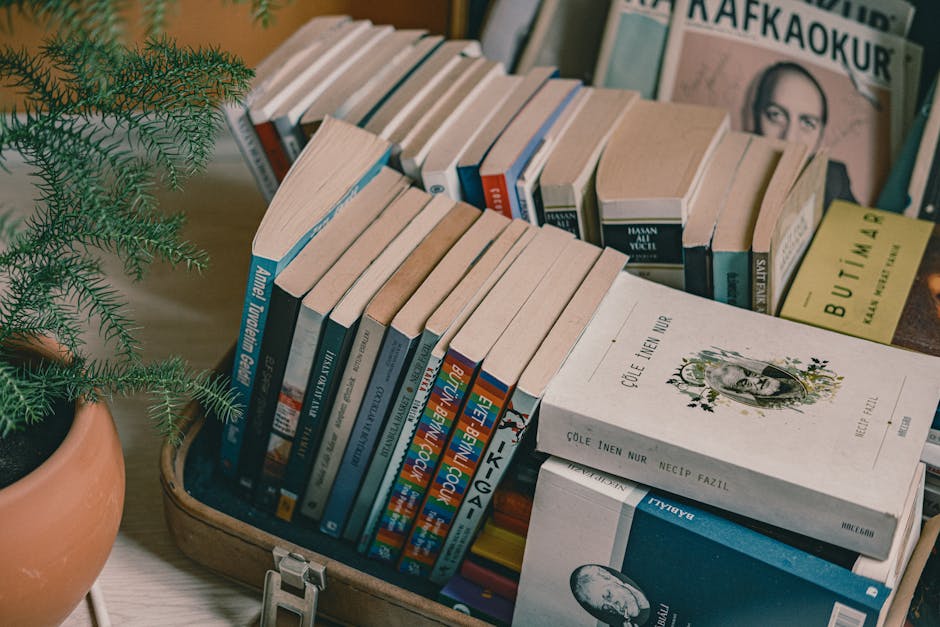
In March, I’ve read six books which I want to tell you about now. Well, apart from one book because I absolutely did not like it. You will very easily tell which one it is 🙂
Books I’ve finished in March
1. Die Abenteuer meines ehemaligen Bankberaters by Tilman Rammstedt
This book was so funny. It tells two stories at once: The story of the former bank adviser of the author and the story of the author trying to convince Bruce Willis to play this bank adviser in his new novel. The story is so absurd, yet funny, that I had to laugh out loud multiple times. The humour is right up my ally. This book was definitely one of the highlights this month and I can only recommend reading it.
Er habe vor Kurzem angefangen, Sport zu treiben, sagte mein ehemaliger Bankberater. Und dann habe er wieder damit aufgehört. “Ich bringe Dinge eben gerne zu Ende”, sagte er.
2. 12 Rules for Life. An Antidote to Chaos by Jordan B. Peterson
I had to read this book for a book club and all I can and want to say is that I disliked it with a passion.
3. A Short History of Nearly Everything by Bill Bryson
This book was the highlight of the books I’ve read in March. It has taught me so much. My review can be found here.
4. Guru by Ru Paul
Another book for another book club. I was expecting a book about his life, some kind of autobiography. When I picked up the book, it turned out it is more a coffee-table-book, a picture book. It is full of photos of Ru Paul but I was rather disappointed by it as I feel it has no clear structure and is not cohesive.
5. “They Can’t Kill Us All”. The Story of Black Lives Matter by Wesley Lowery
Wesley Lowery: They Can’t Kill Us All (2016)
Another book I really enjoyed reading. The book takes us to the protests of the Black Lives Matter movement and I find this such an important and often overlooked topic. My review can be found here.
6. No More Bullshit. Das Handbuch gegen sexistische Stammtischweisheiten by Sorority
David Graeber: Bullshit Jobs (2018)
This book debunks typical sexist statements such as “Women simply don’t want to be in managing positions” and offers a lot of fact based on studies. I am already quite informed about the topics mentioned in the book, so it offered little new for me. However, I believe these books are so important and unfortunately still necessary. The book was published by Sorority, a women network from Austria. And reading about such strong women inspired me to start my own network of women here in the Netherlands and this will be a nice project for this year.
Michael Brown Eric Garner Tamir Rice Walter Scott Philando Castile Freddie Gray Alton Sterling Jamar Clark
All of the above are no longer alive. All of the above were killed by police in the United States in the last years. Between January and August 2015, 24 unarmed black people had been shot and killed by police. I had heard about these killings. I had heard about the Black Lives Matter-movement, but I had not investigated a lot myself. In the last years, my interest and awareness for racial profiling increased. So when I saw the book “They Can’t Kill Us All” The Story of Black Lives Matter I bought it immediately. And I have learned so much. About the people behind the movement. The people who were killed and whose deaths were the tipping points. And most definitely what the groundwork feels like for journalists. Wesley Lowery, a journalist at The Washington Post,takes us to the protests. He gives insight into his work and what it means to write about killings, police violence and suffering on a daily basis.
Wesley Lowery: They Can’t Kill Us All (2016)
Why I liked the book
Lowery was and still is right in the middle of the movement. He is not just a bystander who watches everything unfold from afar. The journalist gained attention because he got arrested in 2014 while covering the protests in Ferguson. He describes what reporting about such a personal matter feels like and how he approached the families of the victims. How he worked with other reporters together and how being surrounded by death impacts his own well-being. I liked the book because it talked about the Black Lives Movement in the context of the history of the US. I learned how the movement came to live. Most of all, I liked the book because it told the stories of the victims and gave a voice to those who cannot speak for themselves anymore. I had never heard about Jonathan Butler, Martese Johnson, Netta Elzie or DeRay Mckesson but now I am definitely wanting to learn more about their impact and activism.
Lowery’s way of writing is easy to follow and understand. It is personal and a little all over the place, which has been criticised by others. I think it only shows the impact these killings are having and helps the pace of the book. It never slows down. The idea of local reporters via social media is interesting and has a lot of power. We cannot always wait for the newspapers to publish information, and we all long for the unfiltered truth.
Wesley Lowery: They Can’t Kill Us All (2016)
Why you should read the book
If you are anything like me (white, European woman, female) you probably don’t face racism or racial profiling often. We all have to be aware and most of all acknowledge that racial profiling and institutional racism exists. That it is a huge part of the daily life for many people. Especially in the USA. Black men and women make up around 12 percent of the nation’s population, “but they accounted for nearly 25 percent of those who were being shot and killed by police.” Lowery’s book gives a deep insight into a movement we all have to join. A movement we have to support and to make sure that we raise awareness for. A movement that is called Black Lives Matter for a reason. The book helps to understand the movement. It helps to be outraged. It helps to get angry. About politics, about racial profiling and about the ignorance of so many people. Sometimes we have to get angry to make a change and Lowery’s book shows how being outraged can turn into a movement.
A seat at the table isn’t worth much if your fellow diners refuse to pass you a plate.
Why it has to be Black Lives Matter and not All Lives Matter
While researching about the Black Lives Matter movement I came across the movement of All Lives Matter. I was astounded by it. I cannot understand why people feel offended by the name of the Black Lives Matter movement and I am wondering if these people actually understand what this movement is for (or against) and why the name matters. The Black Lives Matter movement fights against violence and systematic racism towards black people. It does not mean that only black lives matter and that there are people who started a movement called All Lives Matter makes me angry. This name implies that all lives are facing the same risks, which is simply not true. It shows how people don’t understand structural racism and tend to focus on themselves. The Black Lives Matter movement is not a thread to your privilege, it is a movement for basic rights that should be granted to everyone, no matter the skin colour.
I learned a lot in school but I must admit that I had really no idea about chemistry, physics or biology. Ever. These topics always seemed impossible for me to understand. Sometimes this made me feel a little embarrassed and I was always hoping no one asks me anything about atoms or how the moon influences the tides. During school, I was never really interested in topics such as water, stones and fossils. This all changed because of Bill Bryson’s book A Short History of Nearly Everything. A Journey Through Space and Time which my boyfriend gave me for Christmas last year. You might wonder What is so interesting about fossils? What’s the deal with water? I get it. But read the review and you might understand why this book is here to change your perception.
Why I liked the book
It is the first book I’ve read by Bill Bryson and I had no expectations other than to maybe learn a little. Bryson manages to make the most difficult theories and finding easy to understand and even entertaining. He writes with wit, deep knowledge and from a perspective of infinite wonder and desire to know more. To know more about the earth, the oceans and its inhabitants, theories and concepts. He takes us on this journey through the history of our planet and the (human) beings on it. The book consists of many chapters, one not longer than 20 pages which makes it easy to read.
Bryson writes in a way that made me stand still and marvel at the things we know about the world, but also at the things that are still unknown. His enthusiasms for science and finding answers really took me by surprise and I am still amazed by how science changed the world, how we take certain things for granted. I have, for example, always thought that Dinosaurs have been known/discovered ages ago. But it turns out the T-Rex was only discovered in 1902.
Why you should read the book
I recommend the book to anyone who has a (very) basic knowledge of physics, biology and our planet or thinks these are topics that are just boring. We all need to be reminded that books actually teach us a lot, that we can get enthusiastic for topics we believed to be boring. I remember my geography lessons and being bored because I was not interested in stones and levels of earth. But after reading A Short History of Nearly Everything I am amazed by the knowledge people have and how we can find beauty and surprises in ordinary things.
Things I learned
The Big Bang Theory became popular only in the mid-1960s.
Only about 6000 stars are visible to the naked eye from Earth.
Isaac Newton was the first person in Britain knighted for scientific achievements.
Richard Owen (a horrible person apparently!) coined the termdinosauria in 1841. It means “terrible lizard”.
Even the cookbooks of Marie Curie contain so much radiation that they are too dangerous to handle.
The plates of Europe and North America are parting at about the speed a fingernail grows – approximately two meters in a human life.
There are apparently 2 earthquakes of magnitude 2.0 or greater somewhere in the world every day
Tokyo stands on a meeting point of three tectonic plates, which makes it an easy target for earthquakes
The Earth would be uninhabitable if it was situated 5% nearer or 15% further from the Sun
At any moment, 1.800 thunderstorms are happening around the globe, making it around 40.000 per day
Every second, around 100 lightning bolts hit the ground.
The Pacific holds just over half of all ocean water (51.6%), the Atlantic holds 23.6% and the Indian Ocean 21.2%.
Extract
This paragraph was my favourite and illustrates brilliantly how Bryson writes about the really interesting characters of the past:
On another occasion, while poisoning himself wit elevated levels of oxygen, Haldane had a fit so severe that he crushed several vertebrae. Collapsed lungs were a routine hazard. Perforated eardrums were quite common, too; but, as Haldane reassuringly noted in one of his essays, ‘the drum generally heals up; and if a hole remains in it, although one is somewhat deaf, one can blow tobacco smoke out of the ear in question, which is a social accomplishment.”
Do you enjoy reading books about science? Did any of the facts above surprise you?
Bill Bryson, A Short History of Nearly Everything. A Journey Through Space and Time., ISBN 978-0-552-15174-0, 574 pages. All quotes are from the book.
Sometimes I want to read books that warm my heart. That make me realize how happy and lucky I am to have great frienships. I believe that books help us learn and grow, but also to reflect and readjust believes. When I started reading Dear Mrs Bird by AJ Pearce I was in need of some uplifting story; I had just finished 1984. The book starts off rather funny, even though it is said in the middle of the Second World War:
When I first saw the advertisement in the newspaper I thought I might actually burst. I’d had rather a cheerful day so far despite the Luftwaffe annoying everyone by making us all late for work, and then I’d managed to get hold of an onion, which was very good news for a stew. But when I saw the announcement, I could not have been more cock-a-hoop.
The novel tells the story of Emmeline Lake and her best friend Bunty. Both women live in London. Emmy wants to be a fearless Lady War Correspondent, reporting from war scenes and becoming a journalist. When she sees the job advertisement for a position at The London Evening Chronicle she cannot believe her luck. She even gets an invitation for an interview, but when she enters the building things take an unexpected turn.
The power of words
Emmy starts a job at a magazine, but it is not as a war correspondent and it is not for The London Evening Chronicle. She starts typing letters for the woman magazine Woman’s Friend and has to pre-sort letters for Mrs Bird. Mrs Bird is answering the letters in a kind of help-section for the magazine. But Mrs Bird does not reply to all letters and has a long list of topics that are taboo. Mrs Bird won’t reply to any letter concerning any type of relationship, political activities or cookery. The list is long and Emmy soon realises that the women who write are in need of answers and advice. She does not understand why Henrietta Bird refuses to reply and she soon starts to think of her own way of helping these people.
The power of friendship
Although Emmy and Bunty are best friends, Emmy is reluctant to tell her what she is about to do. We follow their friendship, join them when they go on dates and trying to find a partner for Emmy. Bunty is Emmy’s biggest fan and their friendship endures some ups and downs, which I don’t want to spoil here. Reading the book reminded me of my best friend and how close we are, even though we don’t live close and what my life would be without her. She is the rock by my side, my fan and cheerleader. I know that I can count on her, always, and that nothing can happen that would tear us apart.
The power of books
My best friend and I share one big love: books. We met during university, in our first lecture actually. Reading Dear Mrs Bird reminded me of how powerful books are. When I started reading the book, I was kind of sad and not so happy. Then I started reading and the book changed my mood in an instance: I laughed, cried and laughed again. I realized again how books do have the power to change the world, to change people. How words and letters can change lives and how we must make sure to share them with as many people as possible. How we must do our best to spread good stories, how we must make it possible for as many people as possible to be able to read. Because I don’t want to miss reading and books for anything in the world and can only imagine that others want to feel this joy too.
February was a very good month for me. I started working only 24 hours per week to have more time to focus on the things that make me really happy and to move forward with my blog and crafting-ideas/business. In February, I finished 5 books which I find great. In the middle of the month, I started a book (“12 Rules for Life” by Jordan B. Peterson) and find it very difficult to get through it. I still haven’t finished it yet and it took me around 10 days to read 120 pages. I have to finish it though because it is for my book club in March 🙂 Wish me luck, this book is hard work for me. The books I finished in February were quite the opposite and I enjoyed reading all of them.
Books I’ve read in February
1. You May Also Like by Tom Vanderbilt
Tom Vanderbilt: You May Also Like (2016)
This non-fiction book started slowly for me and I first couldn’t get into it. After the first 100 pages, it started to focus on art and literature and how we acquire a taste and why we like one painting and “hate” another. I found it very interesting to read about how and why we like the things we like and what our preferences actually tell about us.
2. Das 4-Stunden-Startup (The 4-Hour-Startup) by Feliz Plötz
My best friend gave me this book for my birthday to help me make the next steps towards my dream of having my own business. I found the book quite helpful as it gave great tools to work with. For example, I had never heard about the website fiverr.com, a site where you can get all kinds of services. I used the site to have my first enamel pin design created and had an amazing experience. I paid 10 USD and git a great design which I can also use commercially. And all this within three working days!
3. 1984 by George Orwell
George Orwell: 1984 (1949)
Finally!! I have finally read 1984 and enjoyed it a lot. My friend Zu and I read it for our book club. Reading the book, it scared her thinking that “technology and politics are slowly taking over and making people dumber “. I did not share this feeling. However, I found it super interesting to see that Orwell predicted that literature such as Shakespeare will be simplified and use less complex words. I found it fascinating to see how some things are actually taking place right now in real life. I liked the pace of the story and the style of writing. Unfortunately, I found the plot a bit predictable but enjoyed reading this classic nonetheless.
4. Dear Mrs Bird by AJ Pearce
AJ Pearce: Dear Mrs Bird (2018)
This book is definitely my favourite of the five books of February. The story takes place in the Second World War and tells the story of two best friends: Emmeline and Bunty. Emmy wants to be a Lady War Correspondent but ends up typing and answering letters for the Women Magazine Woman’s Friend run by Henrietta Bird. The story shows what true friendship can endure and that having a friend by your side makes you move mountains. I laughed, cried and laughed again while reading this book and can only recommend it.
5. Talking With Female Serial Killers by Christopher Berry-Dee
This is the second book I read by Berry- Dee. The other one being Talking with Psychopaths and Savages. This book about female serial killers disappointed me for several reasons: First, many chapters and persons described are not serial-killers. They have killed one or two people. Of course, this is horrible, but if I buy a book that has the word serial killer in the title, I want to read about serial killers. Second, this book was supposed to be about female serial killers. Yet there are several stories about male serial killers. Why? I understand that this was necessary to give some kind of perspective but I just wished this book would be what the title promised. Lastly, I find it annoying when books have a noticeable amount of typos. I don’t mind a typo here and then but when it affects the reading flow, I am no big fan. I have Talking with Serial Killers still on my to-read-pile and hope that this book will keep its promises.
I have been living in The Hague since the summer of 2016 and I can honestly say that I really love the city. There is so much to discover: museums of all kinds, the beach right around the corner and wonderful unique shops and places. The Hague has a lot to offer for book lovers and I want to show you my top five places for book lovers in this post.
Buchliebhaber-Guide Den Haag
1. Stanley and Livingstone – book shop
This book shop sells every book possible when it comes to travelling – hiking guides, general travel guides, travel experience-books, but also maps and globes. The owners, husband and wife, have been running this gem for over 25 years now and are going to hand the shop over soon – to do more travelling. Who can blame them? What is special about this book shop is the way they wrap your purchase: brown paper, a post stamp from any country around the world (when I bought our hiking guide the other day I got a stamp from Chad!) and a lovely stamp that makes the package look like mail. I absolutely love this eye for detail. If you visit, also look up at the ceiling to discover even more beauty.
Stanley and Livingstone, Schoolstraat 21, 2511 AW Den Haag Opening times are: Tuesday, Wednesday + Friday: 10.00 – 18.00 Thursday: 10.00 – 21.00 Saturday: 10.00 – 17.00 Sunday: 13.00 – 17.00 https://www.stanley-livingstone.eu/
2. Bookstor – book shop and cafe
This book shop combines everything I love about life: books, cakes, hot drinks, dinner-events and music. Situated in Noordeinde, Bookstor is a popular meeting place for readers and coffee lovers. When you walk in, it feels like you entered someone’s living room. Couches and chairs are spread around the whole shop and you can easily forget time while drinking delicious fresh apple juice and read either a newly bought book or one you brought from home. Books and delicious pastry is not all Bookstor offers: every once in a while, they also offer special dinner-events, where two women are cooking for the guests. The food is always around a different country.
This book shop really offers something for everyone – books on every topic possible, postcards, board games, little gifts for book lovers. The perfect shop. This is why I also buy most of my books here. I love browsing the shop and discovering books I have never heard about and getting advise from the very helpful and knowledgeable staff. The ABC has a second shop in Amsterdam and is hosting many great events, such as the feminist book club, writing courses and book launch-parties.
ABC The Hague, Lange Poten 23, 2511 CM Den Haag Opening times are: Monday: 11:00 – 19.00 Tuesday + Wednesday: 10.00 – 19.00 Thursday: 10.00 – 21.00 Friday + Saturday: 10.00 – 19.00 Sunday: 11.00 – 18.00 https://abc.nl/
4. Literatuurmuseum
The museum shows portraits of 500 famous Dutch writers. The portraits show a great diversity which represents the Dutch literature-world in a great way. I personally love looking at portraits and discovering new writers. Honestly, I barely know Dutch authors so visiting the museum gave me a very good impression of what there is to discover and I have some names on my to-read-list, now. In the same building, you can also find a children’s book museum which I have not visited yet, but I heard great things about it. The museums here in the Netherlands are in generall very interactive and I heard the staff member explain different events, such as workshops, to other visitors.
Literatuurmuseum, Prins Willem-Alexanderhof 5, 2595 BE Den Haag Opening times are: Monday – Sunday: 10.30 – 17.00 https://literatuurmuseum.nl
5. Museum Meermanno – oldest book museum in the world
Situated right next to the Malieveld, this museum offers not only temporary exhibitions but also a miniature book library “Bibliotheca Thurkowiana Minor” created by Guus Thurkow. This collection shows 1515 miniature books. The library includes books about history and nature but also whole novels, such as Don Quixote who inspired Guus Thurkow and whose statue is part of the miniature library. You can watch a video about the library here (Dutch only). The museum also offers insights into printing and you can print your own bookmark on an old printing press in the open printing atelier. Isn’t that amazing?
MuseumMeermanno, Prinsessegracht 30, 2514 AP Den Haag Opening times are: Tuesday – Sunday: 11.00 – 17.00 https://www.meermanno.nl
I hope you enjoyed this trip to The Hague. Next month, we are going to explore another beautiful city in the Netherlands.
How many hours per night do you sleep? Do you wake up relaxed and full of energy? Or are you tired and looking for coffee to get you going? I usually sleep at least eight hours every night and wake up relaxed in the morning, but did you know that two-thirds of adults throughout developed nations fail to get the recommended eight hours of sleep per night? The effect of just one night of deficit reaches far into our everyday life: From eating more to being irritated. In his book Why We Sleep, Matthew Walker explains the complex work that our brain does – especially while we are sleeping.
Sleep and Caffeine
While our twenty-four hours circadian rhythm is one factor that dictates our time awake or asleep, sleep-pressure is the second. While we are awake, the chemical adenosine is rising in our brains. The more adenosine we have in our brain, the more our sleeping pressure increases and we want to sleep. Many of us turn to coffee to kick off the day and to get energized. Now, caffeine blocks the receptors that signal sleepiness to our brain. Caffeine makes you feel awake and alert, while your brain is actually getting the signals to go to bed. However, adenosine is still being produced without your brain noticing it. Once the caffeine wears off, many experience a “caffeine crash”. Our brain gets hit by all the adenosine signalling “I am tired” to the brain. The “problem” with adenosine is, that it gets reduced only by sleeping. So if you don’t sleep enough, you wake up with adenosine still making you tired, even after a night of sleep.
The perks of sleeping enough
The number of people who can survive on five hours of sleep or less without any impairment, expressed as a percent of the population, and rounded to a whole number, is zero.
Dr. Thomas Roth
Not only does enough sleep help your brain to get rid off adenosine. Sleep also helps your studying, to foster recently learned things and to prevent serious accidents. According to Walker, “more than 2 million people in the US fall asleep while driving their motor vehicle in one week”. Drowsy driving leads to about 1.2 million accidents per year, in the USA alone. Our brain needs to recover to function perfectly. The recycle rate of our brain is around sixteen hours, after this time, our brain starts to fail. Walker points out that waking up at seven in the morning, staying up all day and hanging out with friends until the night, by 2 o’clock at night, your brain is in the same state as the brain of a legally drunk driver – without you having touched alcohol at all.
Step up your game with sleep
Enough sleep does not only help you stay awake while driving and not kill someone else or get killed yourself, but it also helps you improve skills such as piano playing. Matthew Walker explains that the best thing to do after practising or learning something new is to sleep. “If you don’t sleep the very first night after learning, you lose the chance to consolidate those memories, even if you get lots of “catch-up” sleep thereafter.” It does not only apply to learning for your history exam or practising a new piano routine. Tests have also shown how sleeping helps professional athletes who get enough and deep, good sleep perform much better than athletes who did not rest enough.
How to get enough sleep
For me, a good evening routine is important to get a good night of sleep. Here is what works for me:
No laptop during the last hour before sleeping.
No mobile phone in the bedroom.
Going to bed at the same time. I usually fall asleep between 9.30 and 10.00 every night, also on the weekend.
Getting up at the same time.
Relaxing before I go to bed. This means no appointments scheduled too late, not reading or watching something late that might lead to over-thinking or call-to-action thoughts.
Turning down the heat. I first didn’t want to listen to my boyfriend and always have a warm room, but sleeping with around 18.4 degrees really helps me get better sleep.
No naps during the day. When I sleep during the day, I find it difficult to fall asleep at night. Matthew Walker also recommends to not take naps after 3 p.m.
Cleaning for 20 minutes and listening to calming music. I rarely do it, to be honest, but when I do, I feel super relaxed and proud.
The book Why We Sleep digs much deeper into why we sleep, why we dream and why sleeping and also dreaming is very important to maintain a healthy way of living. I can only recommend reading the book as it tells you so much more about the power of sleep than just the things I mentioned above.
Do you have an evening routine to help you sleep better?
Matthew Walker, Why We Sleep. The New Science of Sleep and Dreams, ISBN 978-0-141-98376-9, 342 pages. All quotes are from the book.
You always dreamed of running a bookshop without the risks and pressure of making a sell? Dream no further: Scotland has you covered. To be more precise – the national book town Wigtown where you can run a bookshop for 1-2 weeks via Airbnb.
It all started with a visit to a bookshop in Amsterdam last October where I discovered the book Diary of a Bookseller by Shaun Bythell. In his book, he tells what it is like to run a second-hand bookshop in Wigtown. While he mentions many positive moments, he also gives a rather realistic picture of his profession. He tells us about the challenges about selling books to and buying books from sometimes rather ignorant people. After reading his book, I decided to never buy books from Amazon ever again.
The Open Book – a unique idea
In this book, you also learn how Mr Bythell’s then-girlfriend had the idea for the Open Book. She enjoyed spending time in his bookshop and was sure that more people would like to know what it is like to run a bookshop. An idea was born and years later, the Airbnb is fully booked for years. You can book your very own bookish holiday for a maximum of two weeks. I had heard about this years ago but forgotten about it soon as it was fully booked. After finishing the Diary of a Bookseller, I had another look and couldn’t believe my luck: The first week of January was free. Our adventure of running a bookshop started on the 31st of December 2018.
Settling in at the bookshop
We arrived in Wigtown on December, 31st around noon and were greeted by a wonderful man, George. He showed us the shop and the flat and warned us that it will probably be quiet an. George made sure we would also take some time off. We were in Scotland and on vacation after all! After settling in, we were able to welcome quiet some visitors and customers. We got homemade shortbread, got to know the neighbours and made plans for our stay: we wanted to explore the area, add new books to the inventory, sort some bookshelves and I wanted to create a new chalkboard sign every day.
Part of the experience is also to write a blog about your stay. You can find ours here. We published three blog posts there and they are very detailed. Reading about past experiences made us realise how lucky we really were. We had booked the holiday in October 2018 and stayed with The Open Book at the end of December 2018. The average waiting time is more than 2 years. The owner of the building told us that there is a waiting list of over 700 people.
How to book your bookshop-holiday
I can only recommend this unique experience to everyone: You get to run a bookshop!! And you really feel like the owner. Of course, without the stress, uncertainties and difficulties, but it gives you a small insight into what the life of a bookseller can be. You can book the holiday via Airbnb. One night costs around 50EUR/58USD and the flat is amazing. It has everything you could wish for and is situated right above the shop.
Keep in mind that it is currently fully booked for three years. I can only advise you to randomly check because there are rare openings when someone cancels. You can also put yourself on the waiting list.
Once you get a spot, start getting excited. Gather ideas for your windows displays. Think about events you want to host. The town of Wigtown and its people are wonderful. Everyone really is as friendly and open as written in the reviews and you will feel at home from the moment you walk into the bookshop.
My personal highlight
The highlight of the whole experience was, apart from being surrounded by books all day long, working together with my boyfriend. He is more rational, realistic and down-to-earth while I started looking for property to bring the idea to the Netherlands on the second day. I also realised that working for myself is something I would like to experience at one point in my life. I left Scotland with a great sense of calm and excitement because I realised that 2019 will be my year. The feeling that anything is possible crept up on me while driving through the beautiful landscape. Knowing that something I’ve created made others laugh and even take photos of is something I will hold forever dear.
Would you like to try The Open Book and run a bookshop for a week?
At the beginning of January, I shared 15 non-fiction books I want to read this year and I thought it would be a good idea to also share a list of fiction books that are on my list. My list is a mixture of recently published books I received for Christmas and books that are at least 5 years old. I like to read books that were published at different times – it makes me understand how literature has changed over the course of the years and which topics and themes once used to be popular and how contemporary literature helps to make a change. So here are nine novels I want to read this year.
1. I Know Why the Caged Bird Sings by Maya Angelou
Blurb: “Here is a book as joyous and painful, as mysterious and memorable, as childhood itself. I Know Why the Caged Bird Sings captures the longing of lonely children, the brute insult of bigotry, and the wonder of words that can make the world right. Maya Angelou’s debut memoir is a modern American classic beloved worldwide. Sent by her mother to live with their devout grandmother in a small Southern town, Maya and her brother endure the ache of abandonment and prejudice. At eight years old and back at her mother’s side in St. Louis, Maya is attacked by a man many times her age – and has to live with the consequences for a lifetime. Years later, in San Francisco, Maya learns that love for herself, the kindness for others, her own strong spirit, and the ideas of great authors will allow her to be free instead of imprisoned. Poetic and powerful, I Know Why the Caged Bird Sings will touch hearts and change minds for as long as people read.” ISBN: 978-0-345-51440-0
2. Howards End by E.M. Forster
Blurb: “On its publication in 1910 Howards End was instantly and widely recognized as a classic. “The word Forsterian is demanded,” wrote one reviewer. Another adjudged its author “likely to be one of our glories”, while a third considered that “if he never writes another line, his niche will be secure”. These forecasts have been amply justified.” ISBN: 978-0-140-43175-9
3. The Circle by Dave Eggers
Blurb: “The Circle runs everything – all your internet activity in one easy, safe and visible place. No wonder it is now the world’s most powerful and influential company. So when Mae Holland lands a job at its glittering California campus, she knows she’s made it. But the more her ideals and ambitions become aligned with those of the Circle, the closer she comes to discovering a sinister truth at the heart of an organization seeking to remake the world in its image”. ISBN: 978-0-241-97037-9
4. The Alice Network by Kate Quinn
Blurb: “1947. In the chaotic aftermath of World War II, American college girl Charlie St. Claire is pregnant, unmarried, and on the verge of being thrown out of her very proper family. She’s also nursing a desperate hope that her beloved cousin Rose, who disappeared in Nazi-occupied France during the war, might still be alive. So when Charlie’s parents banish her to Europe to have her “little problem” taken care of, Charlie breaks free and heads to London, determined to find out what happened to the cousin she loves like a sister. 1915. A year into the Great War, Eve Gardiner burns to join the fight against the Germans and unexpectedly gets her chance when she’s recruited to works as a spy. Sent into enemy-occupied France, she’s trained by the mesmerizing Lili, code name Alice, the “queen of spies”, who manages a vast network of secret agents under the enemy’s nose. Thirty years later, haunted by the betrayal that ultimately tore apart the Alice Network, Eve spends her days drunk and secluded in her crumbling London house. That is until a young American barges in uttering a name Eve hasn’t heard in decades, and launches them both on a mission to find the truth … no matter where it leads.” ISBN: 978-0-06-265419-9
5. The Devil and Miss Prym by Paulo Coelho
Blurb: “A community devoured by greed, cowardice and fear. A man persecuted by the ghosts of his painful past. A young woman searching for happiness. In one eventful week, each of them will face questions of life, death and power, and each of them will have to choose their own path. Will they choose good or evil?” ISBN: 0-00-711604-7
6. A Horse Walks into a Bar by David Grossman
Blurb: “In a little dive in a small Israeli city, Dov Greenstein, a comedian a bit past his prime, is doing a night of stand-up. In the audience is a district court justice, Avishai Lazar, whom Dov knew as a boy, along with a few others who remember Dov as an awkward, scrawny kid who walked on his hands to confound the neighbourhood bullies. Gradually, as it teeters between hilarity and hysteria, Dov’s patter becomes a kind of memoir, taking us back onto the terrors of his childhood: we meet his beautiful flower of a mother, a Holocaust survivor in need of a constant monitoring, and his punishing father, a striver who had little understanding for his creative son. Finally, recalling his week at a military camp for youth – where Lazar witnessed what would become the central event of Dov’s childhood – Dov describes the indescribable while Lazar wrestles with his own part in the comedian’s story of loss and survival. Continuing his investigations into how people confront life’s capricious battering, and how art may blossom from it, Grossman delivers a stunning performance in this memorable one-night engagement (jokes in questionable taste included).” ISBN: 978-1-5247-1137-5
7. Dear Mrs Bird by AJ Pearce
Blurb: “London 1941. Amid the falling bombs Emmeline Lake dreams of becoming a fearless Lady War Correspondent. Unfortunately, Emmy instead finds herself employed as a typist for the formidable Henrietta Bird, the renowned agony aunt at Woman’s Friend magazine. Mrs Bird refuses to read, let alone answer, letters containing any form of Unpleasantness, and definitely not those from the lovelorn, grief-stricken or morally conflicted. But the thought of these desperate women waiting for an answer at this most desperate of times becomes impossible for Emmy to ignore. She decides she simply must help and secretly starts to write back – after all, what harm could that possibly do?” ISBN: 978-1-5098-5392-2
8. Billy Budd by Herman Melville
Blurb: “Herman Melville’s short stories, somewhat neglected during his lifetime, today are considered to be among the small masterpieces of American fiction. His imagination is inventive, ironic, and extraordinarily attuned to our times. His settings and themes are various: the limits of artistic creation; the opposition of innocence and evil; fear of isolation; the inviolate sanctity of the human heart; the fearfulness of and fascination with the “enchanted isles”; the ferocity of the white whale; Calvinist hell-fire and damnation.”
ISBN: The edition is from before 1970, when ISBNs were introduced.
9. The Stars’ Tennis Balls by Stephen Fry
Blurb: “For Ned, 1980 seems a blissful year. Handsome, charming, popular and talented, his life is progressing smoothly, effortlessly, happily. And when he meets the lovely Portia Fendeman his personal jigsaw appears complete. But timing is everything in life, and his life is about to change forever.” ISBN: 978-0-099-47155-4
Which books do you want to read this year? Have you read any of the books from my list?
My year started with a holiday in Scotland where my boyfriend and I ran a book shop for a week and it was the perfect way to welcome this new year: A year full of adventures and goals I have set to myself. One of these goals is to read 52 books – one per week. So far, this is going very well because I read already 7 books in January and that makes me happy. Not because I think it is great to read so much, but because it shows me that I took the time to do something I love so much: reading. It shows me that I have spent less time behind my laptop watching the 354946th documentary on murderers. (I watched many of these nevertheless, but not every day and for hours).
Learning what others are reading makes me happy for two reasons: First, there is someone who reads – which I find amazing just for itself. Seconds, I love lists. I love making lists, I love crossing things off a list, I love getting inspired by other peoples list. And for that reason, I want to share the books I have read in the last month with you.
Books I read in January
1. Little Hands Clapping by Dan Rhodes
The novel is set in an unnamed town in Germany where a lonely, old and grumpy man is the guard in a very special museum: A suicide museum. The story takes many curious turns and despite the very serious topic, it has many comical and funny moments. It was a great first book for this year and I can really recommend reading it. You can find a great animation film for the book here.
2. Summertime by J.M. Coetzee
Every since I had a university course on Barbarism, I am a fan of Coetzee’s writing. I didn’t know that Summertime is the last part of three fiction-memoirs about his earlier life. I wrote a short review of the book here.Â
3. Eleanor Oliphant is Completely Fine by Gail Honeyman
I must admit that I am very often a little sceptical when a book is labelled a bestseller and tend to avoid these books. Why? I don’t know really, to be honest. And reading Eleanor Oliphant made me realise that these books are probably bestsellers for a reason. I loved the book, it made me go through all the feelings and I hope there will be many more books by Gail Honeyman to come in the future. You can find my review about the book here.
4. Start with Why by Simon Sinek
My friend Zu and I read this book for our book club. It was the second book I read by Sinek, the other being Leaders Eat Last. I do like that he tells so many stories of companies and leaders who made a change for their employees, however, I find that the two books give very little actual help on how to either find your why or be a better leader. My friend and I had a good discussion about the book and it is always great to talk about books and getting to know your friends and their life better, but for Sinek, I believe he is much better at talking than at writing.
5. Why we Sleep by Matthew Walker
This book is so interesting and I told so many people at my work about it. (Three want to read it!) Matthew Walker gives a very detailed insight into why sleep is so important and what our brain does while we are asleep. I will write a detailed review about it in the next weeks and also include ways to get better sleep. But for now, all I can say is: EVERYONE SHOULD READ THIS BOOK. Oh, and stop drinking coffee 🙂
6. The Year of Living Biblically by A.J.Jacobs
I am part of three book clubs and I read the book by A.J.Jacobs also for one of them. Years ago, I read the book already in German (I think) and remembered it to be funny and entertaining. Jacobs tries to live by all biblical rules and takes the reader along on his journey. I had no idea how may rules, and also how many absurd rules, the bible states and definitely found it interesting to learn about them. It is also interesting for me to see how much room for interpretation there is. The book is an easy-read and if you are interested in learning more about the bible without reading the bible – this book is perfect for you.
7. Truth in Advertising – John Kenney
This book was a surprise – mostly because I bought it thinking it is actually a non-fiction book about, well, advertising. Maybe reading the header “Winner of the Thurber Prize for Humour” would have been a hint? Surely, but I didn’t read that. Neither did I read the blurb so when I started reading, I laughed out loud. The book was also a surprise because it is funny, heartbreaking, uplifting, hopeless but realistic. It tells the story of Finbar Dolan, an almost 40-year-old man living in New York and working in an advertising agency. His current job is to create a creative, groundbreaking commercial for diapers. We follow him facing ghosts from the past and also the future and see him develop, not too much but yet still SO much. I can only recommend that book and it is my favourite book in January 2019.