Why We Sleep by Matthew Walker – An ode to sleep

How many hours per night do you sleep? Do you wake up relaxed and full of energy? Or are you tired and looking for coffee to get you going? I usually sleep at least eight hours every night and wake up relaxed in the morning, but did you know that two-thirds of adults throughout developed nations fail to get the recommended eight hours of sleep per night? The effect of just one night of deficit reaches far into our everyday life: From eating more to being irritated. In his book Why We Sleep, Matthew Walker explains the complex work that our brain does – especially while we are sleeping.

Book cover Matthew Walker Why We Sleep. Golden doorknob

Sleep and Caffeine

While our twenty-four hours circadian rhythm is one factor that dictates our time awake or asleep, sleep-pressure is the second. While we are awake, the chemical adenosine is rising in our brains. The more adenosine we have in our brain, the more our sleeping pressure increases and we want to sleep. Many of us turn to coffee to kick off the day and to get energized. Now, caffeine blocks the receptors that signal sleepiness to our brain. Caffeine makes you feel awake and alert, while your brain is actually getting the signals to go to bed. However, adenosine is still being produced without your brain noticing it. Once the caffeine wears off, many experience a “caffeine crash”. Our brain gets hit by all the adenosine signalling “I am tired” to the brain. The “problem” with adenosine is, that it gets reduced only by sleeping. So if you don’t sleep enough, you wake up with adenosine still making you tired, even after a night of sleep.

The perks of sleeping enough

The number of people who can survive on five hours of sleep or less without any impairment, expressed as a percent of the population, and rounded to a whole number, is zero.

Dr. Thomas Roth

Not only does enough sleep help your brain to get rid off adenosine. Sleep also helps your studying, to foster recently learned things and to prevent serious accidents. According to Walker, “more than 2 million people in the US fall asleep while driving their motor vehicle in one week”. Drowsy driving leads to about 1.2 million accidents per year, in the USA alone. Our brain needs to recover to function perfectly. The recycle rate of our brain is around sixteen hours, after this time, our brain starts to fail. Walker points out that waking up at seven in the morning, staying up all day and hanging out with friends until the night, by 2 o’clock at night, your brain is in the same state as the brain of a legally drunk driver – without you having touched alcohol at all.

Step up your game with sleep

Enough sleep does not only help you stay awake while driving and not kill someone else or get killed yourself, but it also helps you improve skills such as piano playing. Matthew Walker explains that the best thing to do after practising or learning something new is to sleep. “If you don’t sleep the very first night after learning, you lose the chance to consolidate those memories, even if you get lots of “catch-up” sleep thereafter.” It does not only apply to learning for your history exam or practising a new piano routine. Tests have also shown how sleeping helps professional athletes who get enough and deep, good sleep perform much better than athletes who did not rest enough.

How to get enough sleep

For me, a good evening routine is important to get a good night of sleep. Here is what works for me:

  • No laptop during the last hour before sleeping.
  • No mobile phone in the bedroom.
  • Going to bed at the same time. I usually fall asleep between 9.30 and 10.00 every night, also on the weekend.
  • Getting up at the same time.
  • Relaxing before I go to bed. This means no appointments scheduled too late, not reading or watching something late that might lead to over-thinking or call-to-action thoughts.
  • Turning down the heat. I first didn’t want to listen to my boyfriend and always have a warm room, but sleeping with around 18.4 degrees really helps me get better sleep.
  • No naps during the day. When I sleep during the day, I find it difficult to fall asleep at night. Matthew Walker also recommends to not take naps after 3 p.m.
  • Cleaning for 20 minutes and listening to calming music. I rarely do it, to be honest, but when I do, I feel super relaxed and proud.

The book Why We Sleep digs much deeper into why we sleep, why we dream and why sleeping and also dreaming is very important to maintain a healthy way of living. I can only recommend reading the book as it tells you so much more about the power of sleep than just the things I mentioned above.

Do you have an evening routine to help you sleep better?

Matthew Walker, Why We Sleep. The New Science of Sleep and Dreams, ISBN 978-0-141-98376-9, 342 pages. All quotes are from the book.

A holiday for book lovers: Running a bookshop in Scotland

You always dreamed of running a bookshop without the risks and pressure of making a sell? Dream no further: Scotland has you covered. To be more precise – the national book town Wigtown where you can run a bookshop for 1-2 weeks via Airbnb.

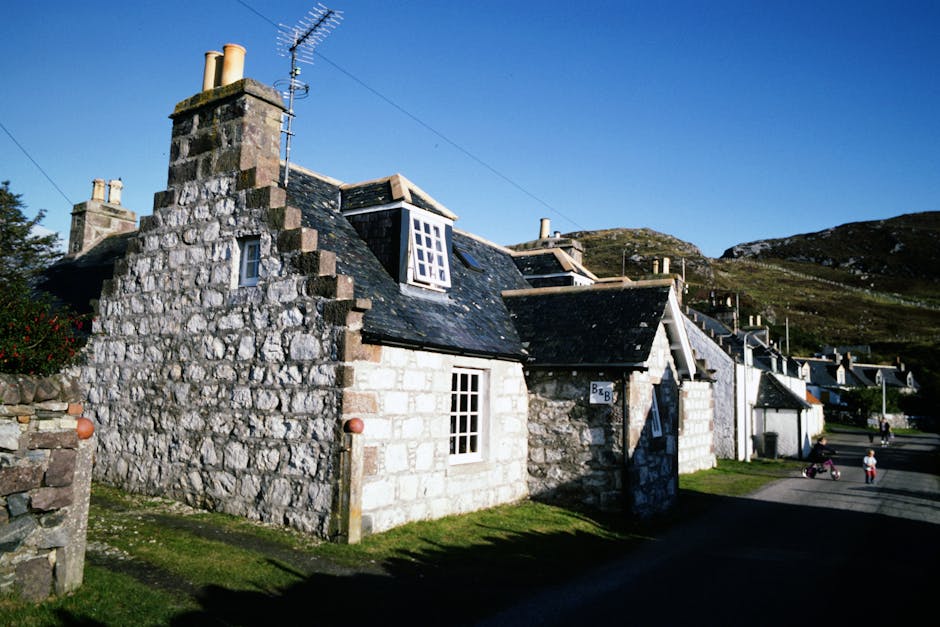
The Open Book bookshop in Wigtown, Scotland – available to rent via Airbnb

It all started with a visit to a bookshop in Amsterdam last October where I discovered the book Diary of a Bookseller by Shaun Bythell. In his book, he tells what it is like to run a second-hand bookshop in Wigtown. While he mentions many positive moments, he also gives a rather realistic picture of his profession. He tells us about the challenges about selling books to and buying books from sometimes rather ignorant people. After reading his book, I decided to never buy books from Amazon ever again.

The Open Book – a unique idea

In this book, you also learn how Mr Bythell’s then-girlfriend had the idea for the Open Book. She enjoyed spending time in his bookshop and was sure that more people would like to know what it is like to run a bookshop. An idea was born and years later, the Airbnb is fully booked for years. You can book your very own bookish holiday for a maximum of two weeks. I had heard about this years ago but forgotten about it soon as it was fully booked. After finishing the Diary of a Bookseller, I had another look and couldn’t believe my luck: The first week of January was free. Our adventure of running a bookshop started on the 31st of December 2018.

Settling in at the bookshop

We arrived in Wigtown on December, 31st around noon and were greeted by a wonderful man, George. He showed us the shop and the flat and warned us that it will probably be quiet an. George made sure we would also take some time off. We were in Scotland and on vacation after all! After settling in, we were able to welcome quiet some visitors and customers. We got homemade shortbread, got to know the neighbours and made plans for our stay: we wanted to explore the area, add new books to the inventory, sort some bookshelves and I wanted to create a new chalkboard sign every day.

Part of the experience is also to write a blog about your stay. You can find ours here. We published three blog posts there and they are very detailed. Reading about past experiences made us realise how lucky we really were. We had booked the holiday in October 2018 and stayed with The Open Book at the end of December 2018. The average waiting time is more than 2 years. The owner of the building told us that there is a waiting list of over 700 people.

How to book your bookshop-holiday

I can only recommend this unique experience to everyone: You get to run a bookshop!! And you really feel like the owner. Of course, without the stress, uncertainties and difficulties, but it gives you a small insight into what the life of a bookseller can be. You can book the holiday via Airbnb. One night costs around 50EUR/58USD and the flat is amazing. It has everything you could wish for and is situated right above the shop.

Keep in mind that it is currently fully booked for three years. I can only advise you to randomly check because there are rare openings when someone cancels. You can also put yourself on the waiting list.

Once you get a spot, start getting excited. Gather ideas for your windows displays. Think about events you want to host. The town of Wigtown and its people are wonderful. Everyone really is as friendly and open as written in the reviews and you will feel at home from the moment you walk into the bookshop.

My personal highlight

The highlight of the whole experience was, apart from being surrounded by books all day long, working together with my boyfriend. He is more rational, realistic and down-to-earth while I started looking for property to bring the idea to the Netherlands on the second day. I also realised that working for myself is something I would like to experience at one point in my life. I left Scotland with a great sense of calm and excitement because I realised that 2019 will be my year. The feeling that anything is possible crept up on me while driving through the beautiful landscape. Knowing that something I’ve created made others laugh and even take photos of is something I will hold forever dear.

Would you like to try The Open Book and run a bookshop for a week?

9 novels I want to read in 2019

At the beginning of January, I shared 15 non-fiction books I want to read this year and I thought it would be a good idea to also share a list of fiction books that are on my list. My list is a mixture of recently published books I received for Christmas and books that are at least 5 years old. I like to read books that were published at different times – it makes me understand how literature has changed over the course of the years and which topics and themes once used to be popular and how contemporary literature helps to make a change. So here are nine novels I want to read this year.

1. I Know Why the Caged Bird Sings by Maya Angelou

Blurb: “Here is a book as joyous and painful, as mysterious and memorable, as childhood itself. I Know Why the Caged Bird Sings captures the longing of lonely children, the brute insult of bigotry, and the wonder of words that can make the world right. Maya Angelou’s debut memoir is a modern American classic beloved worldwide.
Sent by her mother to live with their devout grandmother in a small Southern town, Maya and her brother endure the ache of abandonment and prejudice. At eight years old and back at her mother’s side in St. Louis, Maya is attacked by a man many times her age – and has to live with the consequences for a lifetime. Years later, in San Francisco, Maya learns that love for herself, the kindness for others, her own strong spirit, and the ideas of great authors will allow her to be free instead of imprisoned. Poetic and powerful, I Know Why the Caged Bird Sings will touch hearts and change minds for as long as people read.”
ISBN: 978-0-345-51440-0

2. Howards End by E.M. Forster

Blurb: “On its publication in 1910 Howards End was instantly and widely recognized as a classic. “The word Forsterian is demanded,” wrote one reviewer. Another adjudged its author “likely to be one of our glories”, while a third considered that “if he never writes another line, his niche will be secure”. These forecasts have been amply justified.”
ISBN: 978-0-140-43175-9

3. The Circle by Dave Eggers

Blurb: “The Circle runs everything – all your internet activity in one easy, safe and visible place. No wonder it is now the world’s most powerful and influential company. So when Mae Holland lands a job at its glittering California campus, she knows she’s made it. But the more her ideals and ambitions become aligned with those of the Circle, the closer she comes to discovering a sinister truth at the heart of an organization seeking to remake the world in its image”.
ISBN: 978-0-241-97037-9

4. The Alice Network by Kate Quinn

Blurb: “1947. In the chaotic aftermath of World War II, American college girl Charlie St. Claire is pregnant, unmarried, and on the verge of being thrown out of her very proper family. She’s also nursing a desperate hope that her beloved cousin Rose, who disappeared in Nazi-occupied France during the war, might still be alive. So when Charlie’s parents banish her to Europe to have her “little problem” taken care of, Charlie breaks free and heads to London, determined to find out what happened to the cousin she loves like a sister.
1915. A year into the Great War, Eve Gardiner burns to join the fight against the Germans and unexpectedly gets her chance when she’s recruited to works as a spy. Sent into enemy-occupied France, she’s trained by the mesmerizing Lili, code name Alice, the “queen of spies”, who manages a vast network of secret agents under the enemy’s nose.
Thirty years later, haunted by the betrayal that ultimately tore apart the Alice Network, Eve spends her days drunk and secluded in her crumbling London house. That is until a young American barges in uttering a name Eve hasn’t heard in decades, and launches them both on a mission to find the truth … no matter where it leads.”
ISBN: 978-0-06-265419-9

5. The Devil and Miss Prym by Paulo Coelho

Blurb: “A community devoured by greed, cowardice and fear. A man persecuted by the ghosts of his painful past. A young woman searching for happiness. In one eventful week, each of them will face questions of life, death and power, and each of them will have to choose their own path. Will they choose good or evil?”
ISBN: 0-00-711604-7

6. A Horse Walks into a Bar by David Grossman

Blurb: “In a little dive in a small Israeli city, Dov Greenstein, a comedian a bit past his prime, is doing a night of stand-up. In the audience is a district court justice, Avishai Lazar, whom Dov knew as a boy, along with a few others who remember Dov as an awkward, scrawny kid who walked on his hands to confound the neighbourhood bullies. Gradually, as it teeters between hilarity and hysteria, Dov’s patter becomes a kind of memoir, taking us back onto the terrors of his childhood: we meet his beautiful flower of a mother, a Holocaust survivor in need of a constant monitoring, and his punishing father, a striver who had little understanding for his creative son. Finally, recalling his week at a military camp for youth – where Lazar witnessed what would become the central event of Dov’s childhood – Dov describes the indescribable while Lazar wrestles with his own part in the comedian’s story of loss and survival. Continuing his investigations into how people confront life’s capricious battering, and how art may blossom from it, Grossman delivers a stunning performance in this memorable one-night engagement (jokes in questionable taste included).”
ISBN: 978-1-5247-1137-5

7. Dear Mrs Bird by AJ Pearce

Blurb: “London 1941. Amid the falling bombs Emmeline Lake dreams of becoming a fearless Lady War Correspondent. Unfortunately, Emmy instead finds herself employed as a typist for the formidable Henrietta Bird, the renowned agony aunt at Woman’s Friend magazine. Mrs Bird refuses to read, let alone answer, letters containing any form of Unpleasantness, and definitely not those from the lovelorn, grief-stricken or morally conflicted.
But the thought of these desperate women waiting for an answer at this most desperate of times becomes impossible for Emmy to ignore. She decides she simply must help and secretly starts to write back – after all, what harm could that possibly do?”
ISBN: 978-1-5098-5392-2

8. Billy Budd by Herman Melville

Blurb: “Herman Melville’s short stories, somewhat neglected during his lifetime, today are considered to be among the small masterpieces of American fiction. His imagination is inventive, ironic, and extraordinarily attuned to our times. His settings and themes are various: the limits of artistic creation; the opposition of innocence and evil; fear of isolation; the inviolate sanctity of the human heart; the fearfulness of and fascination with the “enchanted isles”; the ferocity of the white whale; Calvinist hell-fire and damnation.”

ISBN: The edition is from before 1970, when ISBNs were introduced.

9. The Stars’ Tennis Balls by Stephen Fry

Blurb: “For Ned, 1980 seems a blissful year. Handsome, charming, popular and talented, his life is progressing smoothly, effortlessly, happily. And when he meets the lovely Portia Fendeman his personal jigsaw appears complete. But timing is everything in life, and his life is about to change forever.”
ISBN: 978-0-099-47155-4

Which books do you want to read this year? Have you read any of the books from my list?

Books Ive read in January

My year started with a holiday in Scotland where my boyfriend and I ran a book shop for a week and it was the perfect way to welcome this new year: A year full of adventures and goals I have set to myself. One of these goals is to read 52 books – one per week. So far, this is going very well because I read already 7 books in January and that makes me happy. Not because I think it is great to read so much, but because it shows me that I took the time to do something I love so much: reading. It shows me that I have spent less time behind my laptop watching the 354946th documentary on murderers. (I watched many of these nevertheless, but not every day and for hours).

Learning what others are reading makes me happy for two reasons: First, there is someone who reads – which I find amazing just for itself. Seconds, I love lists. I love making lists, I love crossing things off a list, I love getting inspired by other peoples list. And for that reason, I want to share the books I have read in the last month with you.

Books I read in January

1. Little Hands Clapping by Dan Rhodes
Bookcover of Little Hands Clapping: drawing of male face looking like a gravestone

The novel is set in an unnamed town in Germany where a lonely, old and grumpy man is the guard in a very special museum: A suicide museum. The story takes many curious turns and despite the very serious topic, it has many comical and funny moments. It was a great first book for this year and I can really recommend reading it.
You can find a great animation film for the book here.

2. Summertime by J.M. Coetzee
Book cover of

Every since I had a university course on Barbarism, I am a fan of Coetzee’s writing. I didn’t know that Summertime is the last part of three fiction-memoirs about his earlier life. I wrote a short review of the book here. 

3. Eleanor Oliphant is Completely Fine by Gail Honeyman
Cactus, postcard with bird, the book eleanor oliphant is complete fine, red glasses lying on a wooden floor

I must admit that I am very often a little sceptical when a book is labelled a bestseller and tend to avoid these books. Why? I don’t know really, to be honest. And reading Eleanor Oliphant made me realise that these books are probably bestsellers for a reason. I loved the book, it made me go through all the feelings and I hope there will be many more books by Gail Honeyman to come in the future. You can find my review about the book here.

4. Start with Why by Simon Sinek
Book cover of

My friend Zu and I read this book for our book club. It was the second book I read by Sinek, the other being Leaders Eat Last. I do like that he tells so many stories of companies and leaders who made a change for their employees, however, I find that the two books give very little actual help on how to either find your why or be a better leader. My friend and I had a good discussion about the book and it is always great to talk about books and getting to know your friends and their life better, but for Sinek, I believe he is much better at talking than at writing.

5. Why we Sleep by Matthew Walker
Cover of the book Why we Sleep by Matthew Walker. White cover with golden doorknob

This book is so interesting and I told so many people at my work about it. (Three want to read it!) Matthew Walker gives a very detailed insight into why sleep is so important and what our brain does while we are asleep. I will write a detailed review about it in the next weeks and also include ways to get better sleep. But for now, all I can say is: EVERYONE SHOULD READ THIS BOOK. Oh, and stop drinking coffee 🙂

6. The Year of Living Biblically by A.J.Jacobs
Cover of the book The Year of Living Biblically

I am part of three book clubs and I read the book by A.J.Jacobs also for one of them. Years ago, I read the book already in German (I think) and remembered it to be funny and entertaining. Jacobs tries to live by all biblical rules and takes the reader along on his journey. I had no idea how may rules, and also how many absurd rules, the bible states and definitely found it interesting to learn about them. It is also interesting for me to see how much room for interpretation there is. The book is an easy-read and if you are interested in learning more about the bible without reading the bible – this book is perfect for you.

7. Truth in Advertising – John Kenney
Book cover of

This book was a surprise – mostly because I bought it thinking it is actually a non-fiction book about, well, advertising. Maybe reading the header “Winner of the Thurber Prize for Humour” would have been a hint? Surely, but I didn’t read that. Neither did I read the blurb so when I started reading, I laughed out loud. The book was also a surprise because it is funny, heartbreaking, uplifting, hopeless but realistic. It tells the story of Finbar Dolan, an almost 40-year-old man living in New York and working in an advertising agency. His current job is to create a creative, groundbreaking commercial for diapers. We follow him facing ghosts from the past and also the future and see him develop, not too much but yet still SO much. I can only recommend that book and it is my favourite book in January 2019.

Which books have you already read this year?

5 places for book lovers – Haarlem

I moved to the Netherlands four and a half years ago and there are still so many cities I haven’t been to. Exploring new places is exciting for me, but I sometimes find it difficult to go to a place if I don’t have something in particular I want to visit there. So, when I started this blog, I thought it might be nice to combine my interest in travelling and exploring new places with finding great places for book lovers. The idea for my city guides was born and I am proud to present you my first edition:

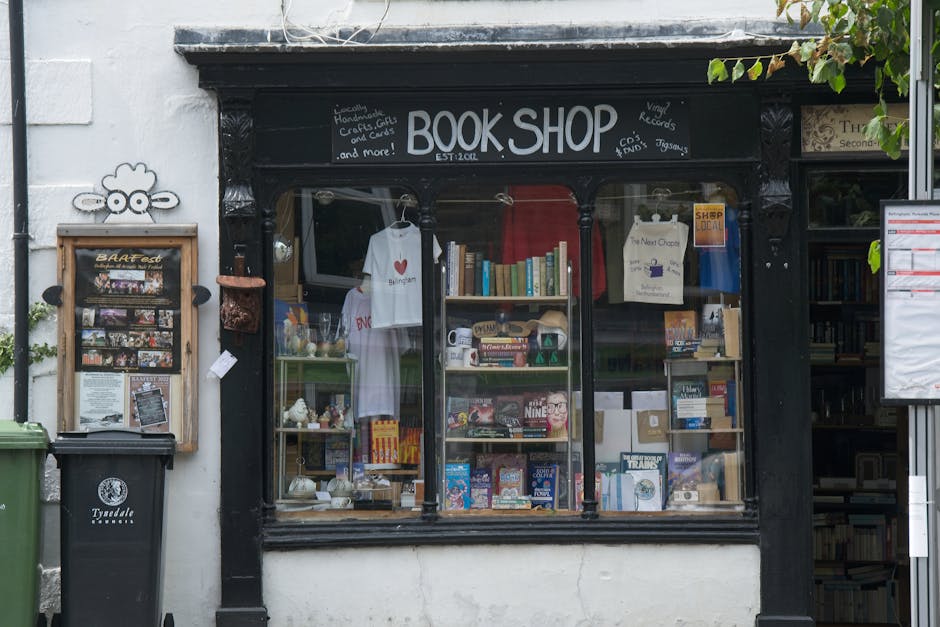
Bookshop exterior in Haarlem, the Netherlands – city guide for book lovers

Haarlem is such a charming town and I think I would also enjoy living there a lot. Cute independent shops, cafes with delicious food and the atmosphere of small town. Grab a cup of tea and join me on my trip to Haarlem.

1. De Vries van Stockum – book shop

This book shop sells new books only – but about every topic possible. The interior of the shop invites you to stay awhile and discover. The shop used to be five different smaller shops but around 100 years ago, they broke down the walls to make it one big shop. While the shop is modern, traces from the past can be found everywhere: The old timber and painting peeling off.
What is special about this book shop is the events they are hosting: They invite you to taste dishes from a recently published cook book or bring people together to form a book club. Just to name a few.

Interior of a Haarlem bookshop hosting book clubs and cookbook events

De Vries Van Stockum, Gedempte Oude Gracht 27, 2011 GK Haarlem
Opening times are:
Monday: 12.00 – 18.00
Tuesday – Saturday: 10.00 – 18.00
Sunday: 12.00 – 17.00
http://www.devriesboeken.nl/

2. De Groene Godin – 2nd hand book shop

The shop signs of this book shop are already special to me and inviting. The shop itself is rather small and offers a wide variety of items: books, board games and small gifts. The bookshop itself is one room which invites you to find hidden treasures of the genres fantasy, SciFi and fairy tales. The second room of the shop is more a living room with a large table surrounded by games. When I visited, a group of people were busy playing a game, so I didn’t take a picture of the room itself.

Every last Friday of the month, you can join other like-minded for a games night. Watch also the event overview for concerts.

Monthly games night at a bookshop in Haarlem, the Netherlands

De Groene Godin, Kleine Houtstraat 84 2011 DR  Haarlem
Opening times: Wednesday – Saturday: 10.30 – 18.00
https://degroenegodin.nl/

3. Antiquariaat Hovingh

This book shop really offers something for everyone – novels, history books, posters and postcards. The interior of the shop is a dream: books and books everywhere you look. There is even a hidden hallway you can discover! Being in the shop does not feel like being in a book shop, it feels more like exploring the huge book collection of a friend and really invites you to stay.

Cosy bookshop interior in Haarlem that feels like a friend's private library

Antiquariaat Hovingh, Kleine Houtstraat 50, 2011 DP Haarlem
Opening times are: Every day, from 11.00
http://hovinghantiquariaat.nl/

4. Teylers Museum – Library

The museum itself is definitely worth a visit: It offers a lot to learn and see for everyone interested in science and also art. However, my personal highlight – and the reason I went to the museum in the first place – is the library.

Historic library in a Haarlem museum – a highlight for book lovers

Walking into this old and huge room was astonishing. You can only visit the library on a guided tour – and it is definitely worth it. Make sure to check with the museum when the tours take place because at the moment I could not find the information on their website. You can, however, make an appointment to visit the library and reading room or make a group reservation for a tour to the library.

Reading room inside a Haarlem library – available by appointment
Library interior in Haarlem – tall shelves and reading tables

Teylers Museum, Spaarne 16, 2011 CH Haarlem
Opening times are:
Tuesday – Friday: 10.00 – 17.00
Saturday + Sunday: 11.00 – 17.00
https://www.teylersmuseum.nl/

5. Sjakie Small – Shop

Wow, this shop has everything – paper, books, lamps, soaps, lunch boxes, candles, and so much more. I somehow believe that book lovers also love stationary and notebooks and Sjakie Small definitely has you covered: They have the most beautiful notebooks which look like a normal hardcover book. Almost everything in the shop is fair trade and you are not allowed to enter the shop if you wear real fur – a great concept to me.

Fair trade bookshop in Haarlem with ethically sourced books
Book display in a fair trade Haarlem bookshop – no real fur allowed
Exterior or window display of a fair trade bookshop in Haarlem

Sjakie Small, Koningstraat 34, 2011TD Haarlem (There are two shops, I only visited the Sjakie Small)
Opening times are:
Tuesday – Friday: 11.00 – 18.00
Saturday: 10.00 – 18.00
Sunday: 13.00 – 17.00
https://www.sjakies.com/contact


I hope you enjoyed the little trip to beautiful Haarlem. Next month, we are going to explore my current hometown The Hague.

Kindness – it starts with yourself

I truly believe that we can all make the world a better place. We can all practice compassion and love. And with this, I don’t only mean for someone else. It has to start with yourself. From my past, I know that it is not always easy to be kind to yourself. We so often focused on the wrong things and measure ourselves and our self-worth by ridiculously high and unrealistic standards. It is a long way to love yourself and accept yourself just the way you are.

Sunlight through leaves – symbolic image of self-compassion and kindness

What has helped me over the course of the years, was showing compassion and kindness to the people around me. It sounds selfish, but making someone else happy and being there for someone else makes me happy, too. It lifts my spirits and spreads joy – when my environment is happy, it is much more likely that I am happy, too. I believe in actions speaking louder than words, but I also think that words have the power to change the world. It does not have to be the whole wide world, if we all started with our small world and the people in it and tried to make this place a better one, we would come a long way.

I know that thinking of acts of kindness is sometimes overwhelming and the internet is full of ideas. For me, some of the ideas are “too big” and they take too long. As mentioned in my post about setting goals, I like to make them as small as possible. The same goes for my little acts of kindness – I want them to be doable and make sure I can perform them, so they cannot be acts like “I want to do one good deed per day for a year”. That is why I thought of 8 acts of kindness we all could do in the next 30 days. I divided them into four categories.
You can find a list of all 8 acts of kindness here.

Acts of kindness to yourself

  • Put your phone to flight mode and read for one hour about something you always wanted to know (more) about.
  • List 5 things you are succeeding at.

Acts of kindness to the environment

  • Take a walk and really take in your environment. Afterwards, list two things that made you happy during the walk.
  • Pick up 5 pieces of trash and put them into the bin.

Acts of kindness to your neighbours/colleagues

  • Make one person a compliment.
  • Ask one person how she is doing and really listen.

Acts of kindness for your family/friends

  • Cook for your friend(s) / partner.
  • Send one person a message and tell her/him why you enjoy their company.
Eucalyptus and a cup of tea surrounded by two postcards with birds and flowers.

I believe that we can all perform these little acts of kindness in the course of the next 30 days and start making our world a better place – one step at a time. You can find a list of all 8 acts of kindness at the bottom of the post, so you can print it and take it with you. If you want, you can share your experience with the #confettiofkindness. That would make me very happy 🙂
[


15 non-fiction books I want to read in 2019

In my last post, I explained why I don’t buy new books until the end of October 2019. Making a reading list for 2019 was easy because I already have the books I am going to read at home 🙂

Sociology/Psychology/Science

I love learning about how our brain and mind works. How our bodies function and why we do the things we do. In the past three years, I started to read more and more books about topics such as the paradox of choice, forming habits etc.


 1. Evicted by Matthew Desmond   

Blurb: ” Monumental and vivid. Matthew Desmond spent years living among tenants in trailer parks and tumbledown houses in Milwaukee. His narrative weaves together the stories of a handful of character struggling, and often failing, to keep a roof over their heads. Evicted demands attention.” Ed Caesar
ISBN: 978-0-141-98331-8 


2. The Memory Illusion by Dr Julia Shaw

Blurb: We rely on our memories every day of our lives. They make us who we are. And yet the truth is, they are far from being the accurate record of the past we like to think they are. In The Memory Illusion, criminal psychologist and memory expert Dr Julia Shaw draws on the latest research to show why our memories so often play tricks on us – and how, if we understand their fallibility, we can actually improve their accuracy. The result is an exploration of our minds that is both fascinating and unnerving, and that will make you question how much you can ever truly know about yourself. Think you have a good memory? Think again.
ISBN: 978-1-847-94761-1


3. The Story of the Human Body by Daniel Lieberman

Blurb: “An epic voyage that reveals how the past six million years shaped every part of us … evolutionary history not only comes alive, it also becomes the means to understand, and ultimately influence, our body’s future.” Neil Shubin
ISBN: 978-0-141-39995-9


4. This Changes Everything by Naomi Klein

Blurb: “Naomi Klein applies her fine, fierce and meticulous mind to the greatest, most urgent questions of our times.”
ISBN: 978-0-241-95618-2 


5. Why We Sleep by Matthew Walker

Blurb: “A neuroscientist shows how a good night’s shut-eye can make us cleverer, more attractive, slimmer, happier, healthier and ward off cancer … It’s probably a little to soon to tell you that it saved my life, but it’s been an eye-opener.” Mark O’Connell
ISBN: 978-0-141-98376-9


6. Everybody  Lies. What the Internet Can Tell Us About Who We Really Are by Seth Stephens-Davidowitz

Blurb: Everybody lies, to friends, lovers, doctors, pollsters – and to themselves. In Internet searches, however, people confess the truth. Insightful, funny and always surprising, Everybody Lies explores how this huge collection of data, unprecedented in human history, could just be the most important ever collected. It offers astonishing insights into the human psyche, revealing the biases deeply embedded within us, the questions we’re afraid to ask that might be essential to our well-being, and the information we can use to change our culture for the better.
ISBN: 978-1-4088-9473-6


7. Occupy by Noam Chomsky

Blurb: Since its appearance in Zuccotti Park, New York, in September 2011, the Occupy movement has spread to hundreds of towns and cities across the world. No longer occupying small tent camps, the movement now occupies the global conscience as its messages spread from street protest to op-ed pages to the highest seats of power. From the movement’s onset, Noam Chomsky has supported its critique of corporate corruption and encouraged its efforts to increase civic participation, economic equality, democracy and freedom.
ISBN: 978-0-241-96401-9 


8. From Bacteria to Bach and Back. The Evolution of Minds by Daniel C. Dennett

Blurb: What is human consciousness? And how did it become possible for our minds to even ask this question? This landmark work is Daniel C. Dennett’s brilliant answer, drawing on decades of philosophical and scientific insights to show our minds evolved and created the thinking tools that make us who we are.
ISBN: 978-0-141-97804-8


True Crime

Let’s face it: I love watching and reading documentaries about serial killers or killers in general. It fascinates me, it scares me sometimes, and it is a huge part of my life. So, of course I have to read some books this year on this topic.


9. Talking with Serial Killers by Christopher Berry-Dee

Blurb: Christopher Berry-Dee is the man who talks to serial killers. A world-renowned investigative criminologist, he has gained the trust of murderers across the world, entered their high-security prisons, and discussed in detail their shocking crimes. (…) Christoper Berry-Dee has collated these interviews into this astounding, disturbing book, which, since its first publication has gone on to become a true-crime classic. Not only does he describe his meetings with some of the world’s most evil men and women, he also reproduces, verbatim, their very words as they describe their crimes. In doing so, he allows his reader a glimpse into the inner workings of the people who have committed the worst crime possible – to mercilessly take the life of another human being.
ISBN: 978-1-78606-974-0


10. Forensics. The Anatomy of Crime by Val McDermid

Blurb: In her novels, Val McDermid has been solving complex crimes and confronting unimaginable evil for years. Now, she’s taking a look at the people who do it for real: the forensic scientists who can unlock apparent mysteries and help deliver justice, thanks to their ability to read the messages left by a corpse, a crime scene or the faintest of human traces.
Drawing on interviews with top-level professionals, ground-breaking research and her own experience, McDermid lays bare the secrets of these fascinating specialists. We learn how maggots can point to the time of death. We discover how a DNA trace a millionth the size of a grain of salt can be used to convict a killer. We realise how hard it is to erase our digital footprints.
It’s a journey that will take us to war zones, fire scenes and autopsy suits, and bring us into contact with extraordinary bravery and wickedness, as McDermid traces the history of forensics from its earliest beginnings to the cutting-edge science of tomorrow.
ISBN: 978-17812517


History

When I was in school, I wanted to study history but my teacher was so boring and not organised that I lost interest for while. Since two years I get back into the topic and especially the time of Henry VIII and Elizabeth I and the history of literature and text is super interesting to me, so I cannot wait to read the books.


11. The Secret Voyage of Sir Francis Drake by Samuel Bawlf

Blurb: In 1577, Sir Francis Drake set out on his three-year expedition to circumnavigate the globe. His journey is one of the most amazing of all human adventures, as he devastated Spanish treasure ships and charted unknown lands – yet six months of his explorations have remained shrouded in mystery. Was there another side to his travels?
In The Secret Voyage of Sir Francis Drake, a masterpiece of detective work, Samuel Bawlf provides persuasive and compelling evidence that he was on a secret mission for Queen Elizabeth I – concealed from the Court and from Spain. It was a quest that sent Drake and the crew of the Golden Hinde into unmapped territory and made him, two hundred years before Cook, one of the greatest explorers the world has ever known.
ISBN: 978-0-141-005911


12. Meetings with Remarkable Manuscripts by Christopher De Hamel

Blurb: “Rich and dazzling … a tribute to some of the most exquisite creations ever made by human hand. I can’t think of many books that have brought the past to life with such learning, beauty and wonderfully boyish gusto.” Dominic Sandbrook
ISBN: 978-0-141-97749-2


13. The Written Word. How Literature Shapes History by Martin Puchner

Blurb: From clay tablets to the printing press, from the pencil to the Internet, from the Epic of Gilgamesh to Harry Potter, The Written Word tells the riveting story of literature – of how great texts and technologies have shaped cultures and civilizations, and altered human history.
ISBN: 978-1-78378-314-4


Others

The first book is a book I am going to read for one of my book clubs. I already read it years ago and remember it to be very interesting and funny, but not so much more.


14. The Year of Living Biblically by A.J.Jacobs

Blurb: Avoiding shellfish was easy.  The stoning of adulterers proved a little more difficult – and potentially controversial. Was it enough to walk up to an adulterer and gently touch them with a stone? Even that could be grounds for accusations of assault, especially with female adulterers in Manhattan. So what’s a good Bible-reading boy to do?
Raised in a secular family but increasingly interested in the relevance of faith in our modern world, A.J.Jacobs decides to dive in head-first and attempt to obey the hundreds of less-publicised rules. The resulting spiritual journey is at once funny and profound, reverent and irreverent, personal and universal, and will make you see history’s most influential book with new eyes.
ISBN: 978-0-0995-0979-0


15. “They Can’t Kill Us All” The Story of Black Lives Matter by Wesley Lowery

Blurb: This is the story of the birth of a movement,  from the award-winning journalist who reported at the heart of it. Based on over a year of on-the-ground reporting, it is an unprecedented portrait of the reality of police violence and endemic racism in America, and those trying to combat it.
ISBN: 978-0-141-98614-2


Which books do you want to read this year? Do you like reading non-fiction books?
Why I dont buy any books for a year

I love books. Books have been with me for as long as I can remember. They are my happy place and I turn to books when I am happy, sad, frustrated, stressed or relaxed. My parent’s house is full of books and I grew up being surrounded by many, many books. While others wished for money for their birthday, I always wished for books. I simply enjoyed reading from an early age. During school, one of my teachers sparked a deeper interest for books in me: I did not only want to read, but I also wanted to understand what goes on in a writer’s mind, how themes and motifs are connected and presented throughout the years. I then studied Comparative Literature, English Literature and German Literature and it was a dream come true. In my courses, we discussed the texts and preparing for a class was, most of the times, just so much fun. My love for books grew only stronger and deeper.

Woman in a bookshop smiling.

During my studies, I made new friends and with them, something happened which I was not used to: Competing about who has read the most books, the longest books and who owns the most books. Thinking back, it is kind of embarrassing how great we felt because we had read a certain book and how snobbish we were. Harry Potter – no, thank you. Anna Gavalda? Is that even “real” literature? It became a kind of obsession to own more books. Why? I don’t really know. I can only imagine that I thought it would make me appear more clever, well-read. I felt that I had to own a lot of books to qualify as a real literature student/person. How silly! Reading and books became a status symbol – one so silly and arrogant that it is difficult for me to accept that this was of thinking was part of my life for a couple of years.

I cannot deny it, I still love being surrounded by books but over the past years, I bought so many books that I felt like I had more unread books than actually read books. This is not the case, but the piles of unread books kept getting higher and higher. Books became yet another thing I would buy and you know, one can never have too many books.

The good of a book lies in its being read

Umberto Eco

This might be true, but I also want to know what the books are about. I want to explore the world that waits behind the cover of a book for me. I want to treasure the books, the work a writer has put into it and take the time to discover something new, learn something new, and maybe become a different person. I believe that books can change you (My thesis was actually about female initiation through reading). I wanted to be able to say what I liked about a book, what I didn’t and not stand in front of my bookshelves and repeat over and over again that I hadn’t read the book yet. So, when my friend Presilla and I started our book club, we both very quickly discovered that we have a lot of books which we haven’t read yet and we decided to not buy new books for a year.

We started in October 2018 and have 286 days to go. Our plan is to give money to a charity that helps people get access to books and teaches people how to read because our dream is that everyone can experience the joy a book can bring.

The book "Little Hands Clapping" by Dan Rhodes lying next to a green plant.

Why buying no books is difficult – a personal dilemma

The first months were not difficult. But I spent the first week in January in a bookshop in a booktown in Scotland. I talked to the owner of a secondhand bookshop, who told me how difficult the business became, especially since Amazon took over. He also mentioned how happy he is when people are coming into his shop, especially in the weeks after Christmas. And it dawned on me: We had already stopped buying books from Amazon or other chains and only bought books in owner-owned independent bookshops, but not buying any books also means not supporting these small businesses. And for me that is difficult: I want to support them, I want to be able to buy my books in a real bookshop for years to come, I want to be able to talk to booksellers and get their advice. But I also want to catch up on the books I already own and get better at cherishing for what they are: a source of knowledge, history, work and creativity. I will continue with our plan until November this year, but I am also making a compromise: I buy more books as presents and buying books as presents for someone else is allowed 🙂 I also want to talk more about books and share my thoughts on them because I already noticed that others in my close circle started to buy books that we talked about and that is a great feeling. I am optimistic that I will find a better and healthier relationship with books after the year. And who knows, maybe I continue a little longer. Or, and that is more likely, I will buy one or two books per month and only buy a new one once I have read the one just bought. Because one thing is for sure:

Books are a refuge and a reservoir of power. The mills of books grind slowly but they grind exceedingly small.

Arthur Bryant

Do you have many unread books? What is stopping you from reading them?

Follow my blog with Bloglovin

How to set goals and reach them – my goals 2019

I want to go to the gym regularly.

I want to eat healthy.

I want to craft more often.

I want to read more.

I (and so many others)

Do these goals sound familiar to you? I used to set myself goals like these for almost all my life. And almost never managed to achieve them. I doubted myself, felt useless and like I had no discipline and as if I am a loser. My attempts to eat healthy food lasted two months, if at all. It was difficult and feeling like a failure is never a good feeling. So, when the new year of 2018 arrived, I, like so many others, wanted to start new – a fresh start with new goals. Only this time it would be different – I would achieve my goals and feel good about myself at the end of the year.

Anne's handwritten goal list for 2019 in a notebook

What I changed this time

At the beginning of the year, I came across the book Stick with it. The Science of Lasting Behaviour by Sean Young and it changed the way I set goals now. He argues that a goal that takes “more than three months to accomplish”, is a dream. You have to keep the dream in your mind and then pick a goal that you can accomplish within one week to a month. So break down your goals into very small steps. You will see the results very easily. Imagine my goal would be to lose 20 kg. It will take such a long time before I can achieve this goal, that I am very likely to give up on the way there. But if my goal is to prepare a healthy lunch for work for one week, it is manageable. I can do this and be proud of my accomplishment – after one week already!

Another important factor to achieve your goals is to make it yourself as easy as possible. One of my goals was to work out more often, so we got a rowing machine and a stepper for at home. Super easy – all I have to do is put on my sports clothes and go to another room. No “But the rain/cold/sun” excuses, no “But the gym is already closed” talk. After a while, the home gym was not enough anymore, so I started looking for gyms in my area. And found one – 7 minutes walking and the opening times are awesome: Mo-Fr: open around the clock, Saturday and Sunday from 8.00 to 8.00. Wonderful! Another thing I have changed was to talk about my goals. I made sure that the people closest to me knew what I wanted to achieve. This way I felt some external accountability and knew I could reach out in case I needed help or support.

The last and final step was to visualise my goals and achievements.

When I read about setting goals, I often read advice like “Draw a picture to see what your life will be like once you achieved the goal”. For many, this might be ideal. For others, like me, this does not work. First, because I cannot draw and would only get frustrated and second, because it gives me the feeling that “everything will be better once you achieved the goal” and this is a mindset, I do not want to have. I do not believe that my life will change dramatically if I read more or craft regularly. But this might be because I have had this way of thinking for a very long time when I was younger (eating disorder) and I can tell you, my life was not better just because I lost weight and reached my goal.

For me, the focus is now on the process. I want to enjoy the way and not only the end/achieving of the goal. If I am not able to enjoy the process, I know that I will replace my goal with another one and another one and this way, I will NEVER achieve any final goal/dream.

Step-by-step-guide to achieve your goals

Step 1: Break down your goals into 
very small steps.

The goal ” I want to read more often” is too broad. Make it “I want to read 20 minutes before I go to work this week”. For example, my goal for 2018 was to read 40 books. This was my, as Young calls it, dream. So I broke it down into small goals which were very easy and fast achievable.: Goal 1: Read in the tram on my way to work for one month. Goal 2: Read 20 pages per day for one week. Goal 3: Read 50 pages per day for one week. Goal 4: Read 50 pages per day for two weeks. And so on. Imagine I only had the goal to read 40 books in a year, it would take me such a long time to achieve this goal and feel the rush of reaching a self-set goal.

Step 2: Make it easy for yourself.

Don’t think that you will join the gym 15 minutes away. Sign up for the gym that is on your way home from work, or that is just around the corner. I, for example, know that I am very unlikely to go to the gym after work, so I chose a gym that is open before work. Now I get up at 5 in the morning and can work out in my gym because it is open 24/7 during the week. This is ideal for me and I only skip a day in the gym when I am really not feeling like going or am sick or travelling.

Step 3: Communicate your goals 
and create a community.

I was always shy about my goals and realised this year that it was partially because they seemed so unrealistic, not reachable. With my very small goals now, I find it much easier to share them. It happens often that I tell my friends about my goals for weightlifting in the gym and then, a couple of weeks or even days later, I inform them proudly that the goal we talked about was reached. It makes me proud of myself. It helps a lot that my boyfriend is such great support and we often go to the gym together. His support is also very visible in step 4.

Step 4: Visualise your goals and 
achievements.

It might sound cheesy, but my boyfriend and I have created a vision board in our living room. It is a pinboard divided into three columns: One for the current month, one for the next month and one for in 4 months time.

At the end of each month, we sit down and write down our goals for the next month (column 1). One goal on one post-it. We write down until when we want to achieve it and hang it on our vision board. Once we have reached a goal, we write the date of achievement on the back and put the paper in our goals-glass. This way, we see 1. that our goals to achieve are getting less and 2. that our glass with achievements is getting fuller and fuller. At the end of the year, we sit together and look through everything we have achieved. My boyfriend told me that it helps him to just stand in front of the board every now and then and to look at his goals to work maybe a little harder in the gym.

The goals in the second column (next month) are goals that we think we can achieve within two months times. This can be, for example, an increase in repetitions in the gym for one exercise or 3 hikes of more than 15 kilometres (the latter is an actual goal we had this summer)

The goals in the last/third column (4 months time) are our dreams. In the time leading up to this month, we will write down small goals for our monthly overview that will, eventually, lead to the bigger goal.

My goals for 2019

Notebook with 2019 goal planning laid out on a table

I love making lists and setting myself some challenging goals. And I cannot deny that a new year always makes me extra-excited to set goals. So, without much further ado, here are my goals for 2019. I have divided them into categories and will show you how my small goals will lead, eventually, to a bigger goal.

Zero waste

Dream: To live almost plastic-free

  • Buy shower gel and hair shampoo without packaging the next time I have to buy these items
  • Find a recipe/instructions on how to make deodorant myself
  • Make deodorant myself once mine is used
  • Buy nuts and potatoes on the market for one month (mid-January – mid-February)
  • Tidy up the bathroom stuff and get rid of things I never use
  • Put cutlery into my locker at work
  • Make paper out of wrapping paper (used) and re-use it

Reading

Dream: To read 52 books in one year 

I already read a lot and often so the goals for this category are more to challenge myself even more

  • Read 30 minutes before work for two weeks in a row
  • Read 30 minutes before going to bed for two weeks in a row
  • Participate in one reading challenge (for one month)
  • Read one book in a day – 4 times

Knowledge

Dream: Never stop learning

Creativity

Dream: Craft on a regular basis

The goals here are a little broader, once I will start with one of them I will break them down into even smaller steps.

  • sew a patchwork blanket with the fabric I already have
  • sew one piece of clothing
  • design my own patterns for stitching ( wall of stitches)
  • change the guest room from a travel-room to my own vision-room
  • create one handlettering poster for our home
  • make something from concrete
  • create a photography calendar for 2020
  • participate in a handlettering workshop
  • host a crafts-night for friends/family

Sports

The goals here are a little broader, once I will start with one of them I will break them down into even smaller steps.

  • Hike 4 times more than 15 kilometres in summer
  • row 10 km
  • row 15 km
  • row 20 km
  • go on the Stairmaster for 20 minutes straight
  • deadlifts: 60kg (4×20)
  • try three new exercises
  • squads: 45 kg (4×20)
  • pushups: 5 in a row

What are your goals for 2019?

Why my mind should not always wander – “Factfulness” by Hans Rosling

20181013_155402-01Almost a year ago, I met my dear friend Karolina at the airport in Amsterdam. We had no flights booked, no backpacks packed – we just wanted to meet up again and the airport was a good meeting spot for several reasons: We both like travelling, being surrounded by travellers and both of us had to travel the same distance to get to this place. We got some food and drinks, sat down in one of the restaurants and started talking about this and that exchanged some belated birthday gifts and she surprised me with a wonderful puffin-towel. Not long into our conversation, I sensed a feeling of panic creeping over the airport and then it happened: people only a few metres away from us jumped out of their seats and started running, screaming, panicking. Karolina would not move, I got up, urged her to go with me. Her back was facing the scene so she didn’t see what I saw. Eventually, I got up and ran away. Without her.

Continue reading “Why my mind should not always wander – “Factfulness” by Hans Rosling”